
When You’re Wrong About Your Scouts (And Glad About It)
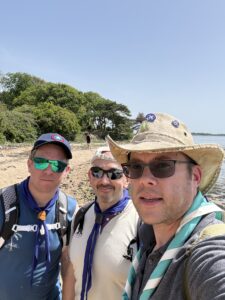
Last May bank holiday, four Scout Leaders set off from London to Poole three on the train with the Scouts, and me in the car loaded up with all the kit. Our scouts had been working towards their Expedition Badge, and after several weeks of planning, they’d decided to do it properly: public transport all the way, meals planned and shopped for themselves, itinerary mapped out to the last detail. The destination? Brownsea Island the birthplace of Scouting itself.

Having the car wasn’t just about shifting kit either. Once we arrived in the local area, the Scouts would be navigating on public transport, so having a vehicle on standby gave us a quiet safety net there if we needed it for any emergencies, invisible if we didn’t. As it turned out, we needed it for neither. What we did need it for was surviving the journey down.
On paper, the travel was straightforward. In practice, it was a bank holiday Friday before half term, which with the gift of hindsight was perhaps not our finest logistical decision. Train cancellations, a fallen tree on the line, and a 2.5-hour delay later, the Scouts finally rolled into Poole Harbour. They took it in their stride. Leaders slightly less so.
The Island That Doesn’t Shout About Itself
Now, I want to be honest here because that’s what this post is really about.
Myself and 1 other Scout Leader had visited Brownsea before. The other two hadn’t, and for them it was genuinely a bucket-list tick: a Scouting landmark, a place of real historical significance. And they enjoyed it. But they came away with the same quietly deflated feeling that I recognised from my own first visit.
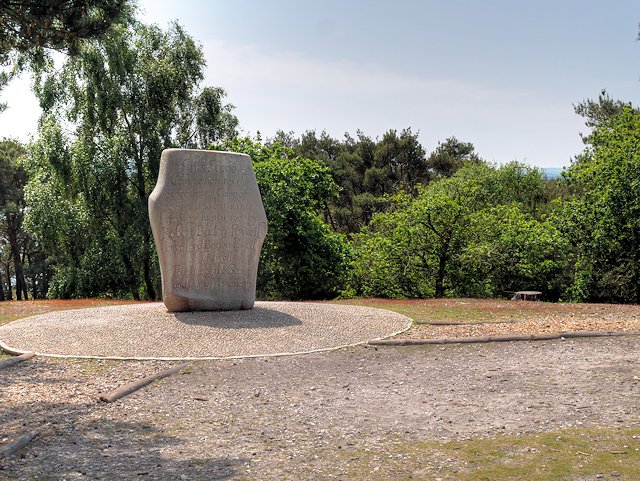
Brownsea Island is beautiful. The National Trust looks after it well. But as a scouting destination? It’s… underwhelming. The actual site of Baden-Powell’s first experimental scout camp in 1907 the founding moment of our entire movement is marked by what is essentially a standard campsite pitch with a flagpole. That’s it. For the birthplace of a global movement that now has over 57 million members worldwide, the National Trust keeps it remarkably, almost bafflingly, low-key.
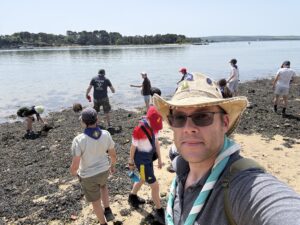
I watched our Scouts spend more time skimming stones on the beach brilliant, sandy, genuinely lovely beach than standing at that historic spot. And honestly? Who could blame them? There wasn’t much to stand there for.
So on the journey home, I had a nagging feeling. Had we brought them all this way, through the chaos of delayed trains and a bank holiday scramble, for something that hadn’t really landed?
The Feedback I Didn’t Expect
The following week, back at our regular scout meeting, I asked them. No agenda, no formal debrief just: what did you actually think of the trip? What did you get from it?
I jotted down their answers. Here’s what they said:
– Being out in nature and away from the city
– Spotting a red squirrel for the first time
– Browsing the Trading Post the wall of neckers, the bargain bucket overflowing with badges from every corner of the world
– That feeling of not quite knowing where they were, of being somewhere unfamiliar and finding it exciting rather than unsettling
– The beach. Learning to skim stones. Hunting for crabs.
– Freedom, not knowing where we were, how to get to our next location.
I sat with that list for a moment.
Not one of them mentioned the flagpole.
And here’s the thing that feedback wasn’t a disappointment. It was a revelation. My Scouts didn’t need Brownsea to be a perfectly curated Scouting museum to have a meaningful experience. They found their own meaning in it: in nature, in independence, in the simple joy of doing something new somewhere new. That is Scouting. Baden-Powell would probably approve more of the crab-hunting than any interpretive panel.
What I Took Away
I nearly talked myself into believing the trip had fallen flat based entirely on my own expectations, not theirs.
It’s a useful reminder for any Scout Leader: our job isn’t to engineer a specific emotional response. It’s to create the conditions for young people to have their own experiences. Sometimes that’s the historic campsite. Sometimes it’s a pebble skipping across the water for the first time.
Will I take scouts back to Brownsea? Absolutely. But I’ll go in with different eyes and I’ll leave more space for them to find their own reasons to love it.
Have you taken your Scouts to Brownsea Island? I’d love to hear how it went whether it moved the needle for them historically, or whether they just loved the beach. Drop a comment below or find us on social media. And if you’re planning an Expedition Badge trip and want to talk routes, logistics, or surviving bank holiday rail travel, get in touch. We’ve learned a few things the hard way so you don’t have to. 😄







1 Comment
When I was a Ranger Leader, I took them to Brownsea as part of their camping tour of the South of England – we only spent a night there – but that was enough – they understood the significance of the place, but enjoyed the environment more – they loved the peacocks who came marching up the hill around 7 pm to reach their beds in the trees behind our campsite. Two of my Rangers took their promise by the stone memorial and flagpole, which was lovely, but I, too, was underwhelmed by the seeming lack of significance in such a massive historical environment. Would I now take my Explorers there? I wouldn’t rush there, but if they said they wanted to go, then I wouldn’t say no either!