
Three habits that are quietly draining the life out of your troop and what to do instead.
Here’s an uncomfortable question worth sitting with: when a young person drifts away from your troop, what’s the real reason?
We often put it down to school pressure, sports commitments, friendship groups pulling in different directions. And sometimes that’s true. But sometimes, more often than we’d like to admit, it’s simpler than that. They were bored. And we made them bored.
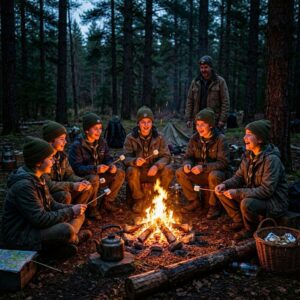
A Scout Leader recently spoke with a former Scout who’d given up as a teenager. The summers, the man said, had been brilliant, outdoors, active, alive. But the winters had been spent stuck in the hall. And that was enough. He left and never came back.
That story is a useful mirror to hold up. What does a typical Monday night look like in your Scout hall? If the honest answer involves a lot of sitting still, a lot of talking about doing things rather than doing them, and a faint whiff of the classroom, it might be time for a rethink.
Problem 1: The lecture
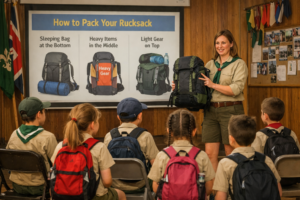
Your scouts have spent six hours at school being talked at. Sitting through a PowerPoint on how a compass works, however well-intentioned, is not scouting. It’s school, with a woggle.
The fix isn’t complicated: go outside. Hand them a compass and a map. Walk them into town, into a park, into the woods. Let them feel the needle swing and figure out which way is north. The learning happens in the doing, not in the explaining.
That said, this isn’t a wholesale ban on words. A brief, sharp explanation before an activity can be genuinely useful. The problem is the twenty-minute sit-down. Break things into bite-sized moments, a minute or two of context, then action, then back for a bit more. Keep it moving. Keep it alive.
“If your scout troop feels like a classroom, lectures, sitting still, the same four walls every week, something needs to change.”
Problem 2: The badge factory
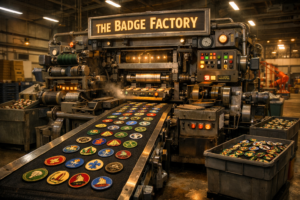
Opening a session by reading out a list of badge requirements is a reliable way to kill the room. Scouts aren’t sitting there excited about sections and criteria. They care about what they’re going to make, build, light, cook, or launch.
The solution: lead with the activity, not the admin. Build the water rockets. Light the fires. Cook the sausages. The paperwork is your job, not theirs, you can match activities to requirements at home, in your own time.
And here’s a thought that’s easy to forget: not every week needs to produce a badge. A games night is Scouting. Making ridiculous outfits out of newspaper is scouting. Teamwork, creativity, problem-solving, these things happen whether there’s a badge attached or not. Give yourself and your Scouts, permission to just have fun sometimes.
Problem 3: Risk aversion dressed up as safety
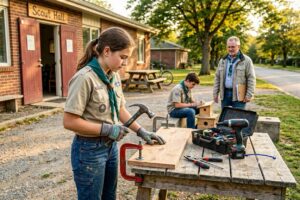
Safety is non-negotiable. Nobody is arguing otherwise. But there’s a version of safety culture that quietly tips over into something less helpful: starting from “how do we stop this from happening?” rather than “how do we make this work safely?”
Scouting has always offered young people something they can’t get at school or at home, the chance to use real tools, light real fires, take on real challenges, in a genuinely safe environment run by people who know what they’re doing. That is the point.
The instinct to protect is right. But when it leads to watered-down activities and cancelled plans, it can quietly hollow out the very thing that makes Scouting worth showing up for. Start with what you want to do, then think carefully about how to do it safely, rather than starting with the risks and working backwards.
None of this is a criticism of Scout Leaders. Most are volunteers, doing something genuinely valuable, giving up their evenings because they care. The question is just whether some of our habits, habits that crept in with good intentions — are working against us.
The Scouts who don’t want to leave, who drag their friends along, who are texting on Sunday asking what’s happeningat Scouts this week? they’re not coming back because of the badges. They’re coming back because something happens at Scouts that doesn’t happen anywhere else. Something active, a bit unpredictable, occasionally slightly chaotic, and fundamentally theirs.
That’s worth protecting.
A question worth asking your Troop
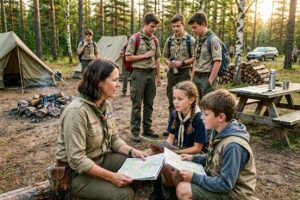
What’s the one change you’ve made that your Scouts genuinely responded to? What made them want to bring their friends? And on the flip side — is there something you’ve held onto out of habit that might be worth leaving behind? The answers are probably already in the room, if you ask.




1 Comment
Hi! 🙂
I’m trying different things because my troop has had a real problem with engagement. Some things are working and I’m going to try more in stages and see what happens.
What’s working:
1 – Splitting the night up into a structure of: Flag & kick-about |activity/skill | break/kick-about | challenge/activity/competition | kick-about then flag.
This is working well. I do worry there’s a bit too much kick-about, but it does burn off energy and they seem to, at the same time, have short attention spans and take a long time to do anything.
2 – Making progress visual. This is something I got from learning about project/operations management for work. As we complete badge requirements, we fill in a cell on a printed-out chart and they can see their bar filling up towards the badge.
3 – Focusing on just one thing for an evening. The suggested activity times on the Scout website seem very optimistic. What apparently should take half an hour takes most of the evening (we have 2 hours). If we want to cook a meal, and the recipe says “10-15 minutes”, allow at least 45.
Other things I want to try:
1 – Patrols (we had a very small troop before the cubs moved up in the past few weeks). We had mini-patrols in a recent cooking activity because we suddenly had a load of cubs on a moving-up night. (Cooking always goes well, but this time it was edible and actually nice.) That worked really well. I think smaller patrols work well for our troop as it means everyone gets something to do.
2 – Scout-led term plans – I want to ask them what they want to do, but I’m not sure how to do this best. I don’t think it’ll work if I make it look anything like school, so maybe a tokens-voting system (like the ones for charity at the supermarket checkouts) or just they all run to one side of the room for aye/nay.
3 – making the PLs prestigious so that their scouts turn to them, and so they feel responsibility and importance themselves. I think this will help with engagement.
I’m fairly lacking in most outdoorsy skills (though I’m trying to learn), so I’m hoping I can contribute to my troop in some more useful way than just being an additional adult, so maybe I can add value this way.
What do you think?