

When you go out camping or with scouts, one item you may find comes in handy surprisingly often is the humble tarpaulin. Available in a variety of styles, thicknesses and sizes, tarps can make a positive difference to any outdoor adventure in a variety of different ways.
Why take a tarpaulin with you when you’re camping? Well, tarpaulins are lightweight, affordable, and critically are resistant to all forms of weather, meaning that they can provide a very adaptable form of cover from the elements. In this article we’re going to take a look at 10 practical uses for a tarpaulin on your next camping or scouting expedition. Let’s get started!
1. As a cooking area cover
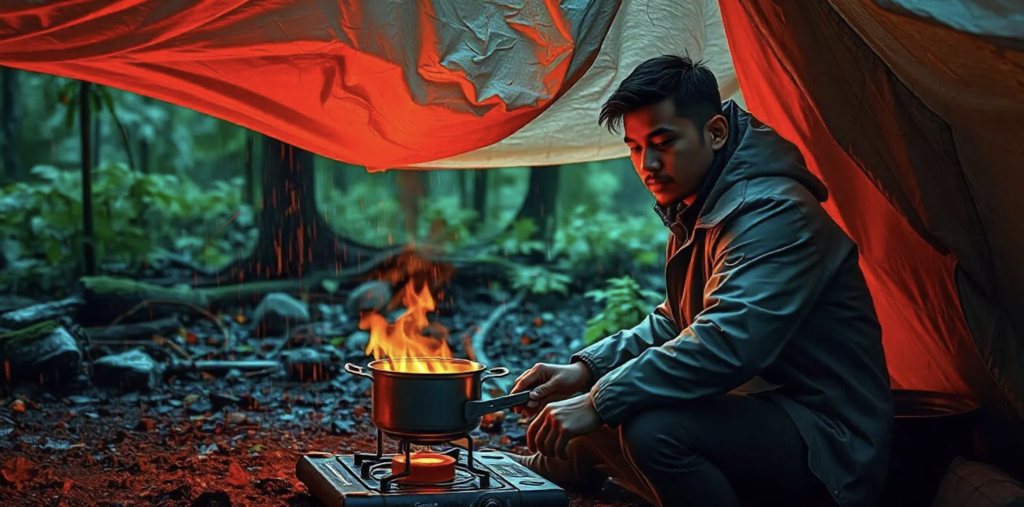
Using tarpaulins, it’s very straightforward to create a temporary canopy over stoves, open fires and other cooking areas to shield them from rain and other bad weather. It is important to remember though that the tarpaulin needs to be kept high up and away from flames, or you might find that the food isn’t the only thing that’s cooking!
2. As an emergency signal
A brightly coloured tarp can be used as part of a distress signal – firstly, try and choose a orange, red or yellow tarp to increase visibility, if possible. Reflective or metallic tarps are also excellent as they can reflect sunlight. Secondly, in terms of positioning, the tarp should be placed either in an open area where it can be seen easily from the air or the ground, or at a high vantage point on a hill or otherwise elevated piece of ground. Make sure to use rocks, logs, or stakes to anchor the tarp so it doesn’t blow away.
In terms of actually signalling to rescuers, the recognised distress signals of ‘SOS’ or ‘X’ can be created with the tarp, or as an alternative metallic or otherwise reflective tarpaulins can be used to reflect light in an eye catching way towards potential rescuers.
3. As a Windbreak
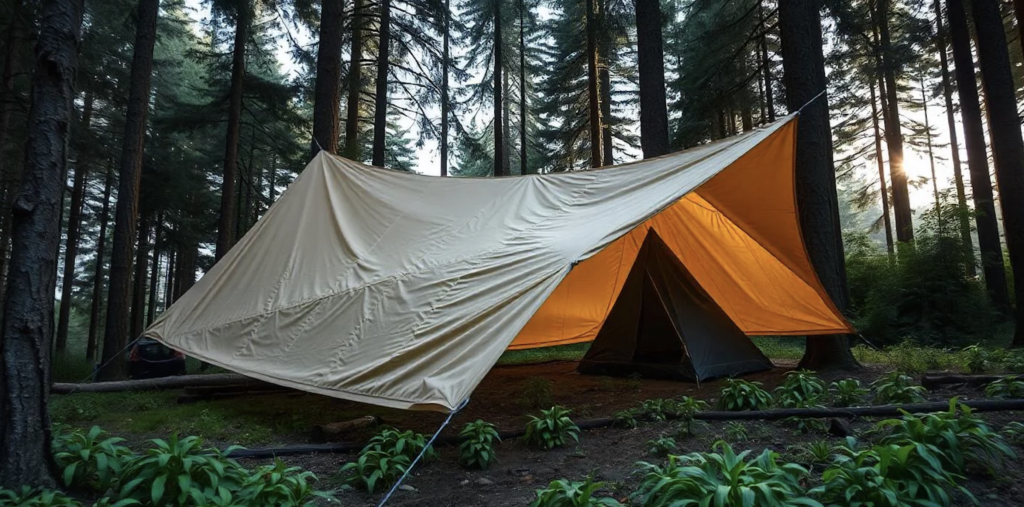
If you’re out on the moors or anywhere else that’s particularly exposed, strong winds may be a problem from the perspective of both keeping warm and preventing items from blowing away. A well anchored tarpaulin (such as one fastened to poles or nearby trees) can create a useful windbreak for your camp.
4. For Water collection
Although we’re not exactly short of water here in the UK, there may be instances where collecting fresh rainwater for drinking or washing may be needed. Tarpaulins can be very useful for this, as long as you bear in mind the below:
- Cleaning the tarp before you start is often a good idea.
- The location should be clear of debris and contaminants like leaves or bird droppings.
- Make sure the tarp is taut and secure to avoid water pooling excessively and causing sagging or tearing.
- Make sure you treat the water by filtering it first to remove debris then either boiling it, using water purification tablets or a portable water filter.
5. As general shelter from the elements

Tarpaulins are often used for extended periods in farming and boating settings to protect valuable assets from damage by rain, sunlight and other environmental factors, and as such they make an excellent means of shelter in the shorter term for camping expeditions as well. Virtually all tarpaulins are waterproof and many are UV protected as well, providing you with both protection from precipitation and from ultraviolet light.
6. For group activities
Particularly relevant for scouting groups, there may be times when an activity, event or group discussion is planned but the underfoot conditions are less than ideal. Enter the humble tarpaulin, which will ensure a clean and dry area for scouts or campers to gather even on damp or uneven ground.
7. Covering storage and vulnerable items

As mentioned above, tarpaulins are particularly handy for covering up valuable items or property that might otherwise be at the mercy of rain, hail or snow. This might include your camp’s firewood, food, or other weather – effected items. Make sure to securely attach your tarp when covering items with it, so that water doesn’t end up pooling on top of it.
8. Ground Cover and groundsheets
One of the many uses of a tarpaulin on a camping excursion is that of a groundsheet; although many campers will have dedicated groundsheets, a tarpaulin can function perfectly well in this capacity as well as performing other functions as well. Keeping your tent dry, even on wet or muddy ground, is after all a crucial part of having a pleasant camping experience.
9. Makeshift Hammock
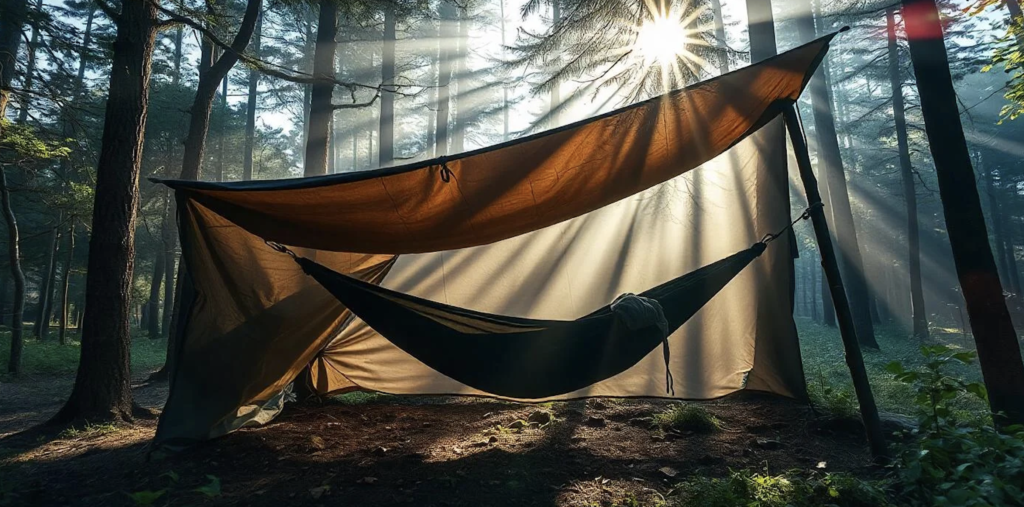
In the event of an emergency, instances where you need to stay off the ground or simply if you’d like a hammock set up and don’t have a specialist one available, a tarpaulin can fill in for you. To set this up, you’ll need:
- A durable, tear-resistant tarp.
- Two strong ropes or cords (preferably at least 10-15 feet each).
- Two strong anchor points (e.g., sturdy trees) spaced approximately 10-15 feet apart.
When setting up your hammock, make sure that you:
- Tie the ropes using secure knots, such as a double bowline or a taut-line hitch, ensuring the tarp hangs firmly.
- Make sure the knots are tight and the anchor points are stable.
- Check the tarp for any signs of stress or wear.
10. Emergency Rain Poncho
Whilst it may not be the most stylish of garments, you could potentially make use of a tarp in the event of a large, unexpected downpour as a poncho – make sure you choose a tarp large enough to cover your torso and upper legs, ideally measuring at least 6×4 feet. Waterproof and lightweight materials like polyethylene or nylon work best. Some other tips are:
- Layering: Wear the tarp poncho over your backpack to keep your gear dry as well.
- Visibility: If your tarp isn’t brightly coloured, consider attaching reflective tape for safety in low-light conditions.
Additional Uses
When the rain stops, your tarp poncho can quickly transition back to its other purposes, such as ground cover or a shelter. It’s a versatile solution for unexpected weather changes when you’re in the great outdoors.
Conclusions
All in all then, we’ve seen plenty of ways in which a seemingly simple piece of kit can have a multitude of uses in any camping or scouting excursion. If you don’t have one already, why don’t you invest in a tarpaulin? Here at Tarpaulins Direct, we have a dedicated section on our website for camping tarpaulins as well as all the accessories you may need for your next trip.








No comments