
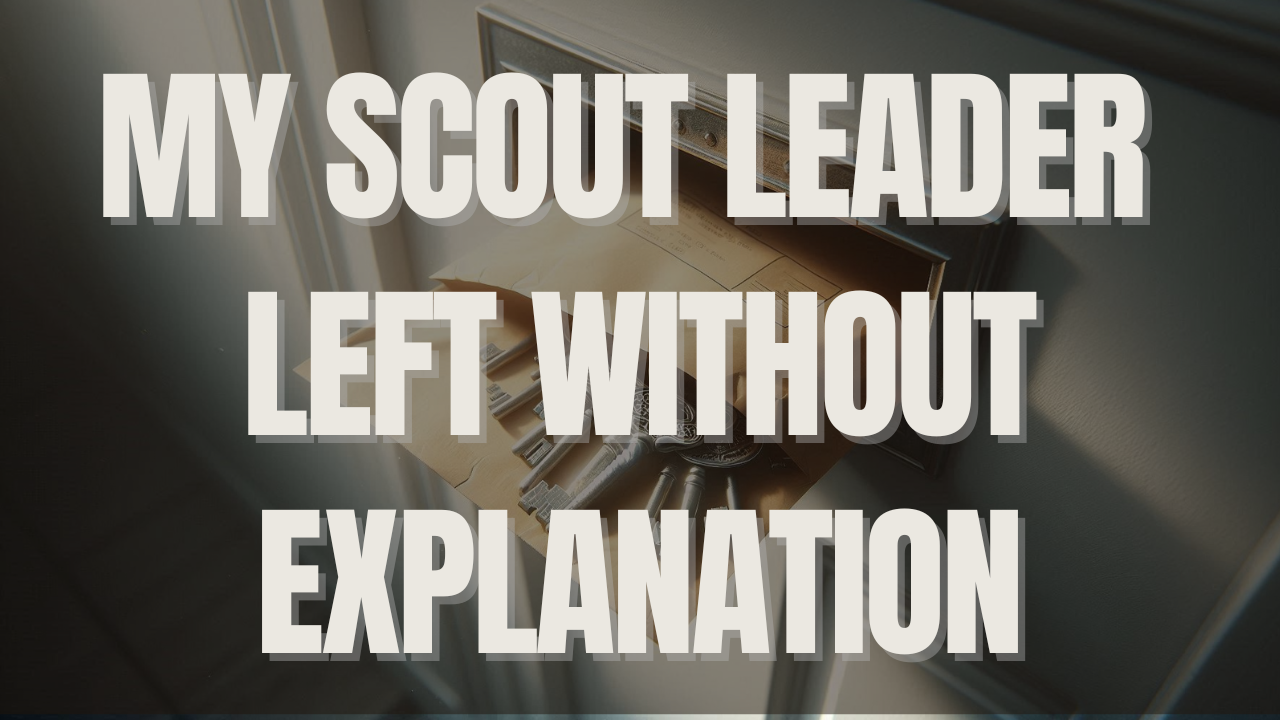

When a Scout Leader left without explanation, I was completely unprepared for what followed. The Jiffy envelope arrived at my door a few days after the WhatsApp message. Inside: the Scout hall keys. Nothing else. No note, no goodbye, just keys from a Scout Leader who had blocked me on every platform and seemingly vanished from Scouting overnight.
If you’re a Group Scout Leader or Group Lead Volunteer, you know this scenario isn’t as rare as we’d like to think. Recently, a fellow GSL reached out to me with an eerily similar situation:
Mark, I’d really value your advice.
Our Scout Leader has suddenly stepped away from Scouting without any warning.
She posted her hall keys back to me, removed herself from all our group and district WhatsApp groups, and even blocked me and the other Leaders on social media.
This has come as a huge shock to all of us.
The only sign she ever gave was a passing comment at our family camp in September, when she mentioned that Scouting was becoming a bit much alongside family life.
At the time, we thought it was just one of those work–life balance remarks we all make now and then.
None of us imagined she would leave so abruptly.
She was a passionate, enthusiastic Leader, and I wish I could understand what led to this decision.
Mark, what would you suggest we do next?
Reading this email felt like looking in a mirror. The parallels to my own experience were uncanny—right down to the keys in the post and the social media blocking.
Until it isn’t.
When Passion Turns to Radio Silence
Here’s what made both situations so jarring: these weren’t struggling volunteers limping toward burnout in plain sight. These were passionate, enthusiastic Leaders. The kind who engage young people, complete their training, and earn praise from fellow Leaders and parents alike. The kind you assume will be around for years.
And then they’re gone.
No handover. No conversation. No closure. When a Scout Leader left without explanation like this, it leaves everyone asking the same question: What did we miss?
The Uncomfortable Truth About Volunteer Leadership
As GSLs, we face plenty of tricky conversations—navigating politics, addressing underperforming Leaders, managing difficult parents. But this situation is different because there’s no conversation to be had. The person has already made their decision and closed every door behind them.
I wanted answers. I went to her house, knocked on the door, got no response. I tried calling, emailing, messaging. Everything bounced back or went unanswered. At some point, you have to recognize the line between concerned leadership and unwanted intrusion. I had to step back.
And that’s the hardest part: accepting that you may never know.
What We Can Learn When We Can’t Get Answers

After living through this and reflecting on similar situations across the movement, here’s what I’ve come to understand:
We’re all volunteers. There’s no contract, no notice period, no blood oath. Unlike employment, where we’re obligated to give weeks or months of notice, Scouting is voluntary. People can walk away when they need to, and sometimes they need to do it immediately for their own wellbeing.
Sometimes the hints were there, but we weren’t listening closely enough. That comment at family camp? Maybe it wasn’t just venting. Maybe it was a tentative reach for help that didn’t land. As GSLs, we can’t attend every section every week—it’s physically impossible with work and family commitments. But perhaps the section Leaders closest to this person picked up on more. Were there requests for help that went unnoticed? Was someone repeatedly asking other Scout Leaders to handle the badge orders, or speak to parents about the next up and coming Camp/Trip, or take on admin tasks? Sometimes people signal their struggles in small ways before they disappear entirely.
The reasons might be deeply personal. Health conditions, relationship breakdowns, financial difficulties, family crises—these are hard topics to discuss with anyone, let alone a volunteer organization where boundaries between friendship and professional relationships can blur. For some people, it’s easier to walk away than to admit they’re drowning. The shame or vulnerability of opening up about a divorce, a mental health crisis, or overwhelming life circumstances might feel more unbearable than simply vanishing.
Blocking and removing themselves isn’t about you. When someone blocks their fellow Leaders on social media and removes themselves from all communication channels, it’s easy to take it personally. But this level of severance usually signals that the person needs complete separation to protect their own mental space. It’s not a judgment of you or your leadership—it’s self-preservation.
What Should You Actually Do?
If you’re the GSL facing a situation where your Scout Leader left without explanation, here’s my honest advice:
Talk to the section Leaders. They may know something you don’t. Have a confidential conversation. Ask if there were warning signs, private conversations, or struggles that never made it to you. Sometimes there’s a “secret WhatsApp group” where concerns are shared but never escalate to leadership level.
Accept the mystery. This is perhaps the hardest thing to do, but continuing to pursue someone who has made it clear they need distance isn’t leadership—it’s pressure. You have to respect their boundary, even when it feels abrupt and unfair to everyone left behind.
Give it time. In a month, six months, maybe even a year, they might reach out with an explanation. Or they might not. Either way, leave the door open without expectation.
Focus on what you can control. Your section needs continuity. Your young people need stability. Your remaining Leaders need support. Channel your energy there rather than into solving an unsolvable puzzle.
The Bigger Question: Are We Creating Space for Honest Conversations?

Perhaps the most thought-provoking question this situation raises is: What kind of culture are we creating for our volunteers?
Do our Leaders feel they can say, “I’m struggling” before they reach breaking point? Do they know they can step back temporarily without judgment? Have we normalized the idea that needing less involvement doesn’t make you less committed?
Or have we inadvertently created an environment where the only way out feels like complete disappearance?
These are uncomfortable questions without easy answers. But if we’re losing passionate, capable Leaders without warning, we need to ask them.
What Would You Do?
If you’ve been in this situation—either as the GSL left holding the keys or as someone who has watched a colleague vanish without explanation—I’d genuinely value your perspective. What helped? What would you do differently? What advice would you give to Leaders navigating this painful ambiguity?
Because here’s the truth: we’re all doing our best in a movement built entirely on goodwill and spare time. Sometimes people reach their limit in ways we don’t see coming. And sometimes, the most compassionate thing we can do is respect their exit, even when we don’t understand it.
The keys eventually get replaced. The section carries on. But the questions linger.
Perhaps that’s okay. Perhaps not every story gets a tidy ending. Perhaps part of volunteer leadership is accepting that we can’t save everyone, understand everything, or control outcomes—even when we desperately want to.
All we can do is create the kind of environment where people feel safe speaking up before they feel they need to disappear. And when they do walk away, we honor their service and respect their boundaries.
Even when it leaves us standing on the doorstep, unanswered questions in hand.







No comments