


I recently came across an article from Sky News that stopped me in my tracks. It reported that for millions of children across the UK, something as simple as jumping in puddles or climbing trees is completely out of reach. As someone who’s spent nearly 15 years working with young people in Scouting, from Beavers right through to training adult leaders in practical outdoor skills, this hit close to home.
The statistics are sobering. 4.5 million children in the UK live in poverty. That’s roughly nine children in every classroom. At the same time, one in five children in England is struggling with their mental health. We’re facing what experts are calling a “double crisis,” and I’ve seen both sides of it play out week after week in my own Scout group.
Before I go any further, let me be clear: I’m not here to bash modern education. My wife is an amazing secondary school teacher, and I see firsthand the dedication, creativity, and sheer hard work that goes into classroom teaching. I also have two children in state education who are both thriving. Teachers do incredible work, often with limited resources and increasing pressures. The classroom absolutely has its place, and structured learning is essential.
The Classroom Has Its Place, Nature Has Another
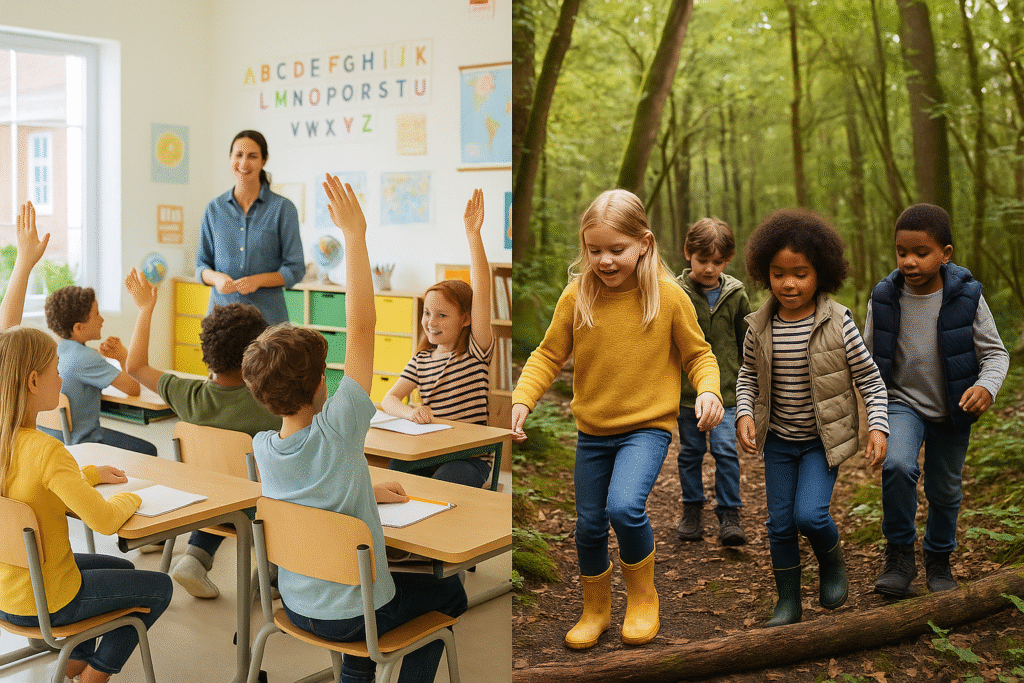
But here’s what I’ve learned over fifteen years of getting young people outside; nature adds something different. Something we can’t replicate indoors, no matter how good the heating system is or how interactive the whiteboard.
There’s something about the tactile experience of touching bark, feeling mud squelch under your boots, or picking up a piece of moss that engages children in a completely different way. It’s not better than classroom learning; it’s complementary. When a young person learns to light a fire, they’re not just learning a skill; they’re building confidence, understanding risk management, and connecting with something primal and real.
Fresh Air Isn’t a Luxury; It’s a Necessity
The article highlighted research from Natural England showing that 80% of parents say time in nature improves their child’s behaviour, while 86% say it boosts mood and wellbeing. I don’t need research to tell me this; I see it every single week. The child who can’t sit still in a classroom often thrives when they’re building a Nature shelter or tracking wildlife. The anxious teenager who struggles socially finds their confidence when they’re teaching younger Scouts how to tie knots.
And it’s not just the children. As Scout Leaders, we feel it too. There’s something restorative about being outside, even for just five minutes. Yes, as the weather gets colder, the lure of central heating and my Electric Blanket for my bed is strong; I won’t pretend otherwise! But I’ve learned that some of our best moments happen in the rain, in the cold, when everyone’s a bit uncomfortable but pushing through together.
One parent quoted in the article said their child “sleeps better and that’s a definite plus. When he’s been outside, he’s not as wired.” I hear this constantly from parents in my own Scout Group. After an evening spent outdoors, children are physically tired in a healthy way, not mentally exhausted from screens and artificial stimulation.
The Barrier We Don’t Talk About Enough
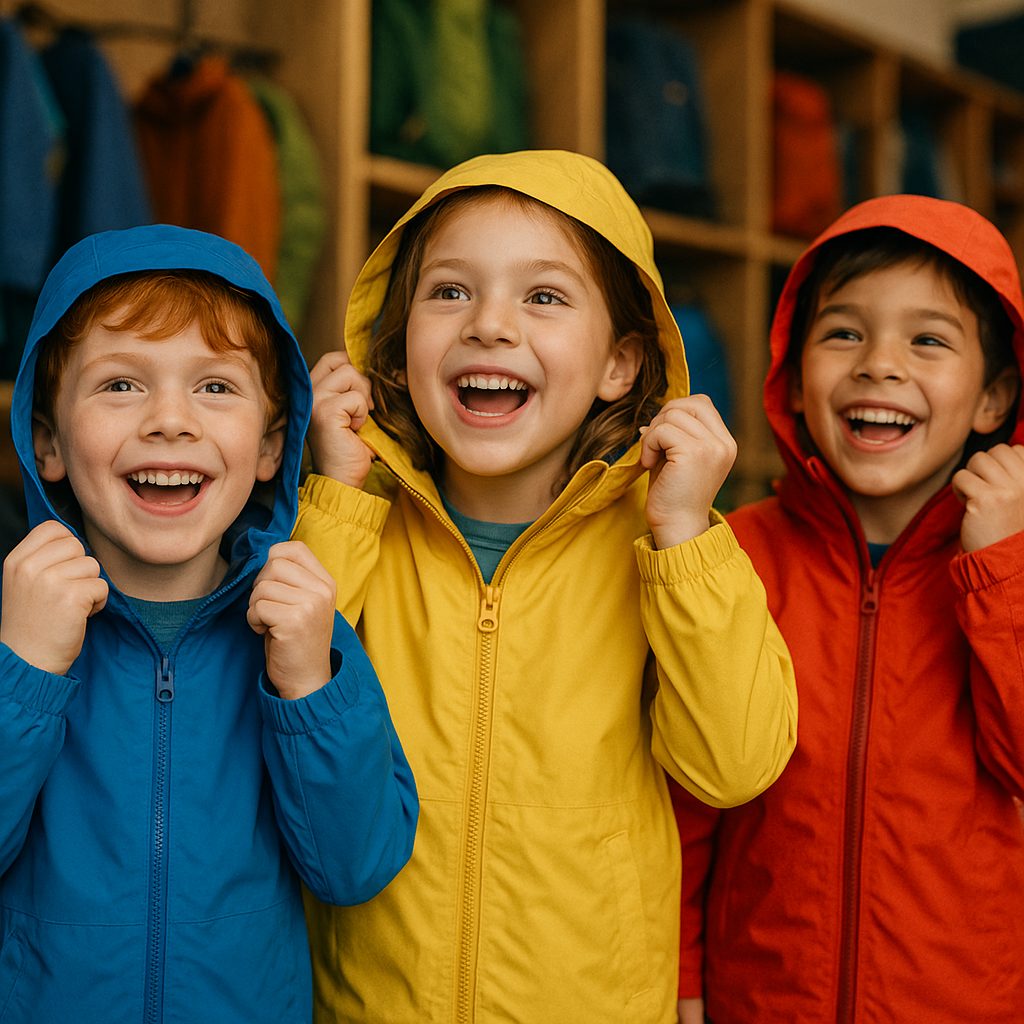
Here’s where it gets difficult. The article featured a primary school in Woking receiving donated waterproof jackets, trousers, and wellies through the Waterproofs and Wellies campaign. For many children, these were their first proper outdoor garments. Think about that for a moment; their first.
In Scouting, we pride ourselves on being accessible to all, but I’d be lying if I said cost wasn’t a barrier. A decent waterproof jacket can cost £30 to £50. Wellies, another £15 to £20. For families already struggling, that’s simply not possible. And without the right kit, outdoor activities become miserable rather than magical. No child wants to be the one who’s cold and wet while everyone else is comfortable.
This is where organisations like Scouting can, and must, step up. We’ve worked hard to maintain equipment libraries, to accept donations of gently used outdoor kit, and to ensure that no young person misses out on camp or activities because of cost. But it shouldn’t fall solely on volunteers. The research mentioned in the article is stark: 70% of primary schools don’t have access to nature or the outdoors. That’s not acceptable.
Nature Isn’t Just About the “Big” Experiences

One detail from the article particularly resonated with me. A teacher described how children at their school were “amazed to find blackberries growing on the school grounds or pumpkins in the corner of the playground.” This is something I’ve witnessed countless times; the wonder that comes from discovering the natural world right on your doorstep.
We often think outdoor education means big camps, hiking expeditions, or adventure activities. And yes, those experiences are transformative. But some of the most powerful moments happen in the everyday: noticing the first frost, watching a robin follow you as you dig, feeling raindrops on your face, or yes, jumping in a puddle.
The assistant headteacher quoted in the article said, “Nature is calmer, quieter, and gives them space to breathe.” That space to breathe is increasingly rare in children’s lives. They’re overscheduled, over-stimulated, and increasingly tethered to technology. Nature offers permission to slow down, to be present, to just exist without needing to achieve or perform.
What Scouting Brings to the Table
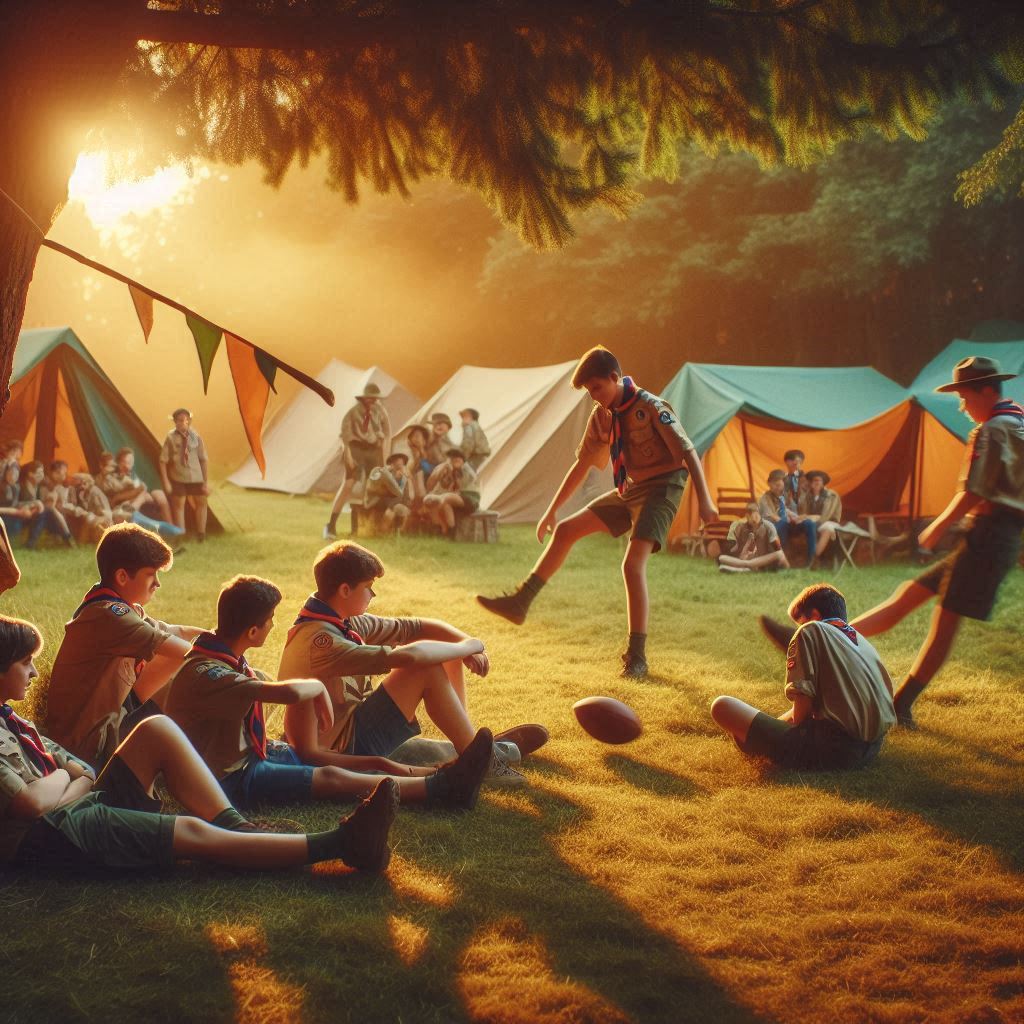
In my years of working across all sections, and training leaders in practical outdoor skills, I’ve seen how Scouting uniquely bridges this gap. We provide:
Structure with freedom: Young people know what to expect, but there’s space for exploration and discovery within that framework.
Progressive skill building: From learning to use a penknife safely at eight years old to planning multi day expeditions as teenagers, we scaffold outdoor competence.
Peer learning: The older children teaching younger ones creates a culture where outdoor skills are valued and celebrated.
Regular, consistent access: It’s not a one-off school trip; it’s week in, week out, building familiarity and confidence.
But most importantly, Scouting normalises being outside in all weathers. We don’t wait for sunny days. We embrace the rain, the mud, the cold. We teach young people that there’s no such thing as bad weather, only inappropriate clothing, and then we do our best to make sure everyone has what they need.
The Lifeline, Not the Luxury

The article concludes with campaigners saying that time in nature “isn’t a luxury, it’s a lifeline.” As a Scout leader watching the intertwined crises of child poverty and mental health, I couldn’t agree more.
I’ve seen withdrawn children blossom when they discover they can start a fire. I’ve watched anxious young people find peace sitting by a campfire. I’ve seen groups forge deep friendships while navigating in the rain, getting thoroughly lost, and finding their way back again.
A teacher in the article said, “A walk in the woods might not fix everything, but it’s a step in the right direction.” That humility is important. Nature isn’t a cure all, and outdoor activities won’t solve systemic poverty or erase mental health challenges. But they are part of the solution. They build resilience, confidence, and connection; all things our young people desperately need.
Moving Forward
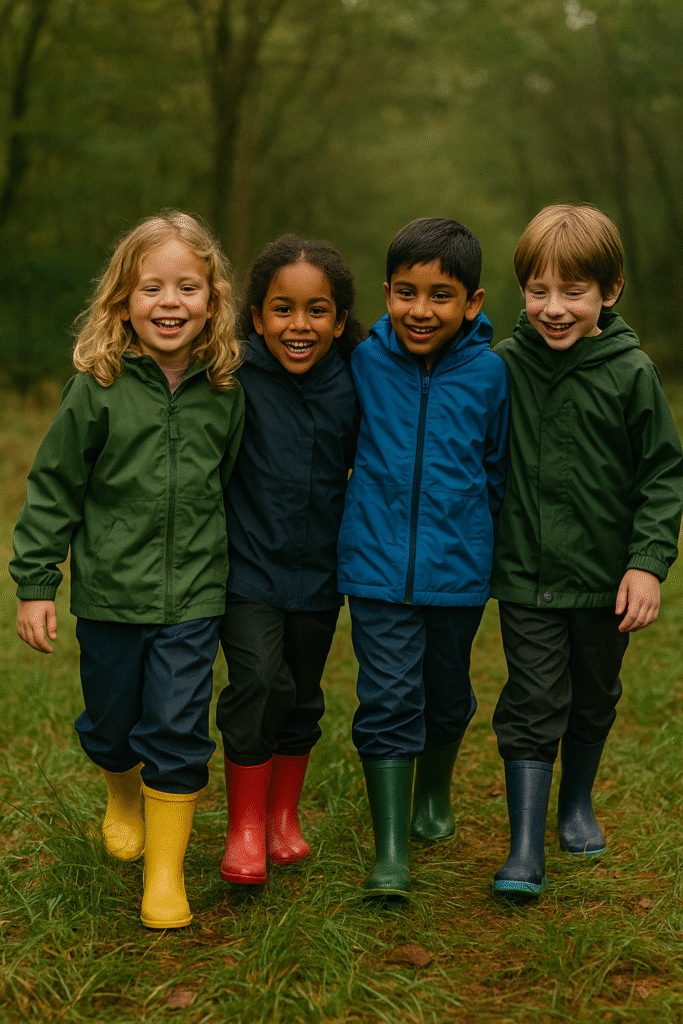
So where do we go from here? I don’t have all the answers, but I know this: every child deserves muddy boots. Every child deserves to climb a tree, splash in a puddle, and feel the wind on their face. These aren’t middle class luxuries; they’re fundamental childhood experiences.
We need initiatives like the Waterproofs and Wellies campaign to continue and expand. We need schools to prioritise outdoor learning, even when budgets are tight. We need youth organisations like Scouting to remain accessible and welcoming to all families, regardless of income. And we need society to recognise that the “nature gap” is as serious as any other form of inequality.
Because at the end of the day, it’s not really about the wellies or the waterproofs. It’s about what they represent: the opportunity to explore, to discover, to connect with something bigger than screens and four walls.
It’s about giving every child the chance to be a child; outdoors, engaged, and alive to the world around them.
Even if it’s just for five minutes. Even in the rain. Especially in the rain.








No comments