

Is a Jumble Sale Worth It? A Scout Leader’s Reality Check
Fundraising ideas come and go, but the humble jumble sale has been a staple of Scout groups for decades. We spoke to experienced leaders to get the honest truth — the good, the messy, and the mysteriously pot-heavy.

The Verdict: Hard Work, But Worth It
Let’s not sugarcoat it. Running a jumble sale is a serious undertaking. As one experienced leader put it bluntly:
“I would say they take a lot of effort. You’ve got to get organised. You’ve got to get everything in. You’ve got to sort through it. You’ve got to get rid of stuff you wouldn’t sell.”
And yet — the same leader wouldn’t hesitate to do it again. Why? Because their group regularly clears over £1,000 from a single event, making it one of their main fundraisers of the year. Fellow leader Clifford backs this up, having made over £1,000 himself. Gavin goes even further, running three jumble sales a year, calling it the cornerstone of his group’s finances.
So yes — it’s graft. But the returns can be genuinely significant.

More Than Just Money: The Community Connection
Here’s what separates a jumble sale from simply doing a sponsored walk or selling raffle tickets — it brings the community into your Scout hut.
“It puts you into the community. Bringing people into the hut that perhaps weren’t in there before… they get to see the young people interacting.”
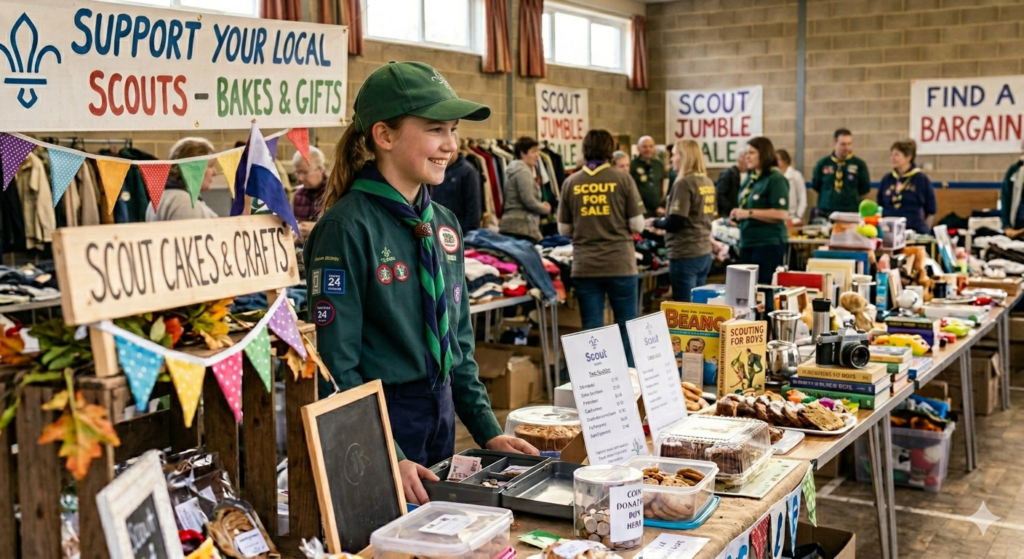
Shoppers who pop in to browse — or who wander in on polling day if your hut doubles as a voting venue — suddenly get a window into what Scouting actually looks like. They see young people on the stalls, engaging with customers, handling transactions. That kind of organic community visibility is hard to put a price on.
Skills for Young People
Put your Scouts on the stalls. Seriously — it’s one of the most underrated aspects of the whole event.
Running a stall gives young people genuine, hands-on experience with:
- Handling money — making change, counting cash, understanding value
- Card payments — chip and pin is increasingly the norm, so familiarity matters
- Customer interaction — greeting people, answering questions, negotiating prices
- Teamwork and responsibility — holding their own on a busy stall
Cash, Card, or Both?
The cashless society is coming, but it hasn’t fully arrived — especially at community events. The practical advice from leaders who’ve been doing this for years: accept both.
Chip and pin facilities are increasingly expected, and some shoppers simply won’t carry cash. But as one leader put it: “Cash is king” — plenty of bargain hunters still come armed with a handful of coins and a carrier bag.
Having both options removes any friction at the point of sale and means you never lose a sale.

The Stuff That Doesn’t Sell: Dealing With Leftovers
No matter how good your jumble sale is, there will be leftovers. Having a post-sale plan is essential.
What to do with unsold items:
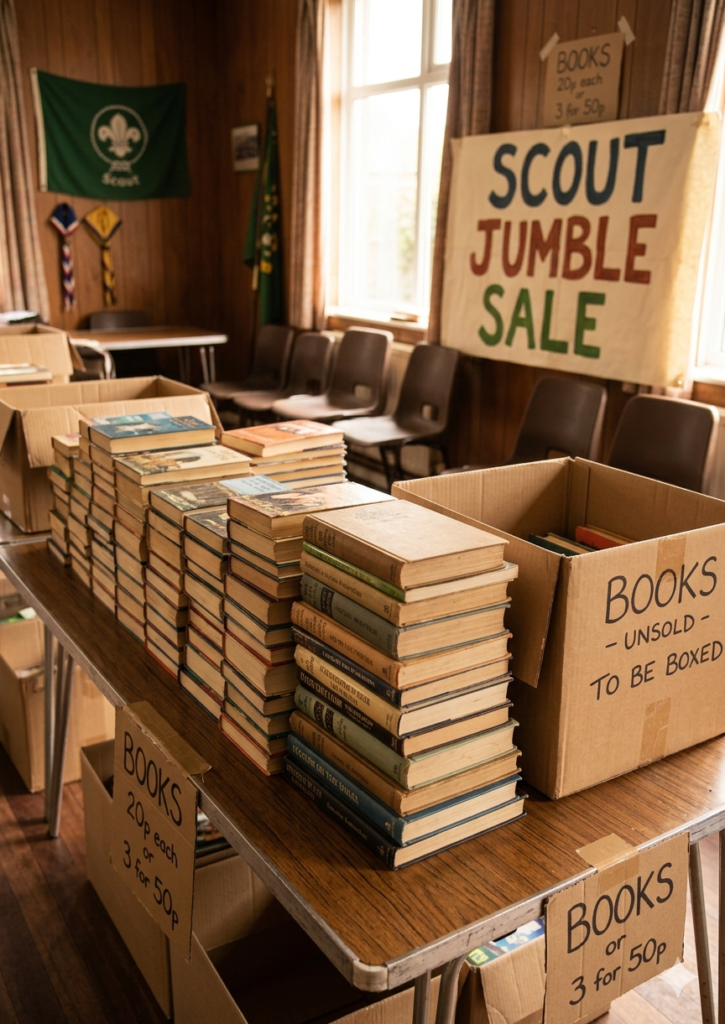
- Books — many charity book chains will buy them in bulk. It’s not a fortune, but it’s something, and it keeps them out of landfill.
- Sellable items — consider passing them to other local charities or organisations running their own sales.
- The rest — sometimes, a skip is unavoidable. Budget for it mentally and practically.
The goal is to minimise waste as much as possible, both for environmental reasons and because disposal costs eat into your profit.
The Mystery of the Themed Donations
One of the oddly delightful things about jumble sales? The donations often have a theme — and you won’t know what it is until the bags start arriving.
“One year, the main items we got were loads of pots — pottery plant pots. We just had hundreds of them. It was just the thing that year!”
Whether it’s plant pots, board games, baby clothes, or VHS tapes from 1997 — there’s always something. Part of the fun is seeing what your community is collectively clearing out of their attics this year.

Make It a Calendar Fixture
One of the most important lessons from experienced groups: run it at the same time every year.
When your jumble sale becomes a fixture on the local calendar, people start to expect it. They hold onto their donations. They tell their neighbours. Returning shoppers know when to come back. That consistency builds momentum and reputation — both of which translate into better donations and bigger crowds.
Post-COVID, many groups had to pause the tradition. If yours lapsed, now might be the time to bring it back.

Key Regulations to Be Aware Of
It’s not all just pricing up bric-a-brac. As one leader noted, there are regulations to abide by these days. While rules can vary by local authority, it’s worth checking:
- Electrical items — many sales avoid these altogether due to safety testing requirements (PAT testing)
- Children’s items — clothing and toys may have safety standards to consider
- Food — if you’re selling refreshments, food hygiene rules apply
- Insurance — make sure your group’s insurance covers public events
When in doubt, check with your District Lead Volunteer.
Is a Jumble Sale Right for Your Group?
Not every leader loves them — and that’s okay. As one group member cheerfully admitted, some leaders “go on holiday at the same time” to make their feelings known.
But if you have: ✅ A willing team of helpers
✅ A Scout hut or suitable venue
✅ Access to donations from your community
✅ A group of young people ready to serve on stalls
…then a well-run jumble sale can be one of the most community-connected, skill-building, and financially rewarding fundraisers in your annual calendar.
📸 [IMAGE SUGGESTION: Wide shot of a Scout hut exterior with people queuing outside before a jumble sale opens — a sense of anticipation and community buzz]
Have you run a jumble sale for your Scout group? Share your tips, highs, and “how did we end up with 200 plant pots?” moments in the comments below.
Tags: #ScoutFundraising #JumbleSale #ScoutLeaders #Scouting #CommunityFundraising #YouthSkills






No comments