


I’m on a mission to bring back our Scouting traditions before they slip away entirely. I’m genuinely worried that if we don’t pull back to our Scouting roots and heritage, our Scout groups risk becoming nothing more than youth clubs with occasional camping trips, not the transformative movement Baden-Powell envisioned.
Don’t get me wrong—Scouting has evolved in brilliant ways. We’re more inclusive, more aware of safeguarding, and we’ve embraced skills that are genuinely relevant for today’s world. That’s progress, and it matters. But this isn’t about rejecting modernization. It’s about not throwing away the baby with the bathwater when it comes to preserving meaningful Scouting traditions.
Here are some traditions that are quietly disappearing:
The Scout Uniform

Traditional Scout uniforms are giving way to casual t-shirts and hoodies. While comfort matters, the uniform connected us to something bigger than ourselves—a worldwide brotherhood with shared values and standards. When a Scout puts on that uniform, they should feel part of something that spans generations and continents, not just their local group’s latest merch order. The uniform was one of the most visible Scouting traditions that united us globally.
Wood Badge Training
The original Wood Badge training emphasized foundational Scouting knowledge and leadership principles. Today’s versions, while still valuable, sometimes miss the historical significance and core philosophy that made this training legendary. We’ve modernized the content, but have we lost some of the magic that made Wood Badge holders feel like custodians of something special?
Traditional Camping

Our iconic Icelandic tents sit in storage, replaced by lightweight modern alternatives. I’m guilty of this too—my troop uses modern tents because they’re easier to carry and dry out. But every time I see those traditional tents gathering dust, I wonder what we’re losing. There’s always a practical excuse, but each compromise takes us further from our roots and the traditional camping Scouting traditions that built character.
Campfire Culture
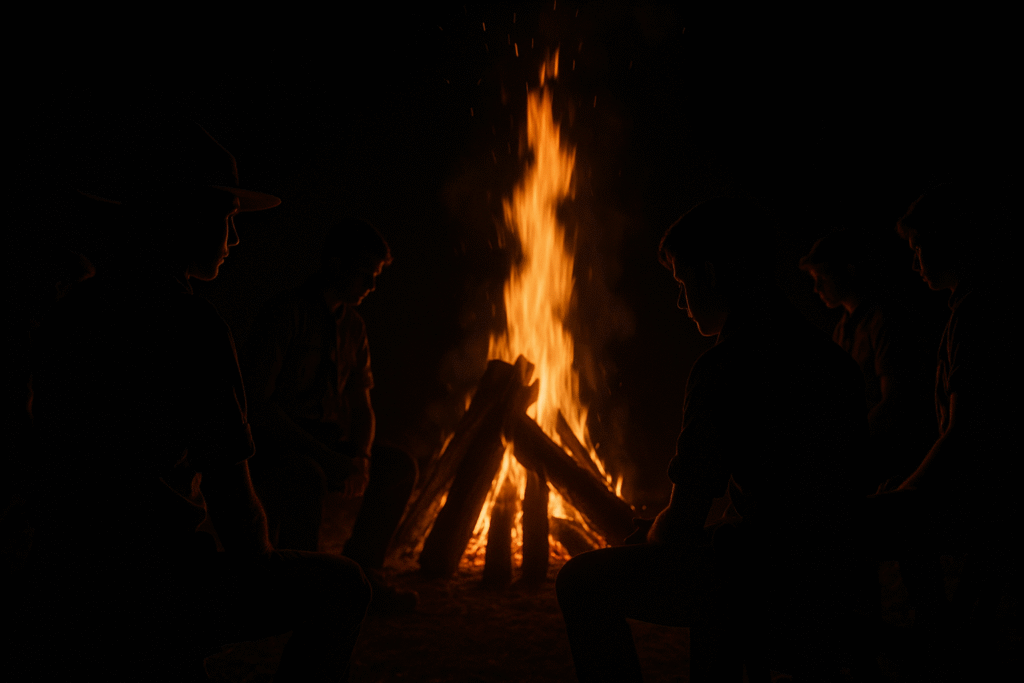
Campfires still happen, but the ceremony around them feels less central to the experience. Many young Scouts seem less engaged with these communal traditions. The songs, the stories, the reflective moments under the stars—these weren’t just entertainment. They were how we built connection and passed down wisdom. Campfire ceremonies are among the most powerful scouting traditions we have.
Campfire Ashes
The symbolic importance of campfire ashes, often used in ceremonies to represent continuity and memory, remains meaningful. However, the frequency and formality of these ceremonial campfires has lessened in many groups, reducing opportunities for these powerful symbolic moments. When did we stop treating fire as sacred?
Scout Leader Names
The tradition of Scout Leaders using traditional Scouting names like “Skip,” “Akela,” or “Baloo” is becoming less common. Many leaders now simply go by their first names. While this might feel more approachable, those traditional names connected leaders to Scouting’s rich history and the adventure stories that inspired generations of young people. There was something magical about being called “Akela”—it meant you carried the wisdom of the pack. These naming conventions were part of the scouting traditions that made leadership roles feel special.
Traditional Skills

Tracking, bushcraft, and map reading remain in the curriculum, but Google Maps has replaced the compass. Technology is useful, but are we losing the independence and confidence that comes from mastering these fundamental outdoor skills? Knowing you can navigate home without a phone signal isn’t just a skill—it’s a mindset. These traditional outdoor scouting traditions built self-reliance and confidence.
Ceremony and Meaning
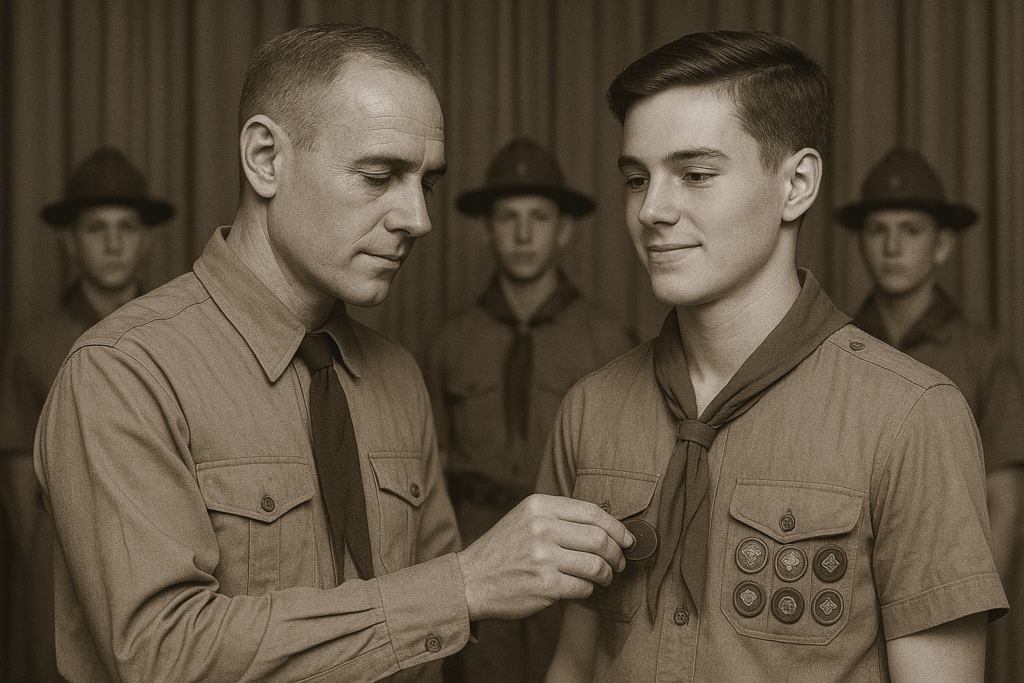
Badge presentations used to be big ceremonies and a significant part of Scouting. Now they’ve become quick handovers at the end of meetings, almost rushed. I’m guilty of this with my own Scout troop too. The rituals that once made advancement feel truly significant are being streamlined away. When everything becomes routine, nothing feels special. Ceremony was central to the Scouting traditions that created meaning.

The Question We Need to Ask
What Scouting traditions do you miss most? More importantly: Which ONE tradition would you bring back tomorrow if you could?
The challenge isn’t just preserving the past—it’s helping young people understand why these traditions mattered in the first place. Not because “that’s how we’ve always done it,” but because these rituals and practices created something profound: a sense of belonging to something larger than yourself, a connection to history, and the confidence that comes from mastering timeless skills.
As the World Organization of the Scout Movement continues to evolve globally, we must ask ourselves how to balance innovation with preservation. Let’s discuss how we can honor our heritage while still making Scouting relevant for today’s youth. Because if we don’t act soon, we risk losing what made Scouting special in the first place—not the activities themselves, but the meaning behind them.
These Scouting traditions aren’t just nostalgia—they’re the foundation of what makes Scouting transformative. It’s time we brought them back.








3 Comments
I am a member of the Hampshire scout Heritage team. We are a group of about a dozen former leaders with the avage age about 75/85 years. He have a realy good Hertitage centre on a Scout camp site in the New Forest, but to be truthful I am sure that Hampshire County Scouts would be quite willing to put the contents into s skip. We have tried to get new ‘younger’ people involved to keep the dream going, but without sucess. I am planiing a one day event in the middle of the county in April, with programme of some Scouting traditional skills trying to get people to visit, try, and maybe stay with us.
Oh wow Brian,
Email me the dates , location etc and let’s make it an event!
I will come and have a visit aswell
Hi Mark
Thanks for your reply. Our event is to be held on Saturday 11th April from 10-5pm at the 1st chandlers Ford Scout HQ (Arrow District Hampshire). The building which dates back to WW2 is the ideal location for our event, also only a couple of minutes off Junction 13 (Eastleigh) on the M3. The address is Brickfield Lane, Chandlers Ford, Eastleigh SO53 4DP. I don’t know where you hang out, but if your were to come you will receive a warm welcome.