

When you think of Scout tents, what comes to mind? For most of us, it’s probably the traditional Icelandic patrol tents with their classic canvas and wooden poles, or perhaps the ubiquitous dome tents that have served Scout groups for decades.

But times are changing, and I’m facing a decision that many Scout Leaders will recognise: our tents are done. After 15 years of faithful service, countless repairs, and more patches than I can count, they’ve reached the end of their life. We’ve got budget available to replace them, and it’s got me thinking—is it time to break with tradition?
The Case for Moving Forward
Baden-Powell wanted Scouting to be a movement that evolved with the times. We’ve already made the shift in many areas: metal poles have replaced wooden ones in dining shelters, and fiberglass poles are standard in dome tents (though any leader knows the pain of a Scout pulling instead of pushing and snapping one when you’re miles from the nearest repair kit).
So why not air beam tents?
My Personal Experience

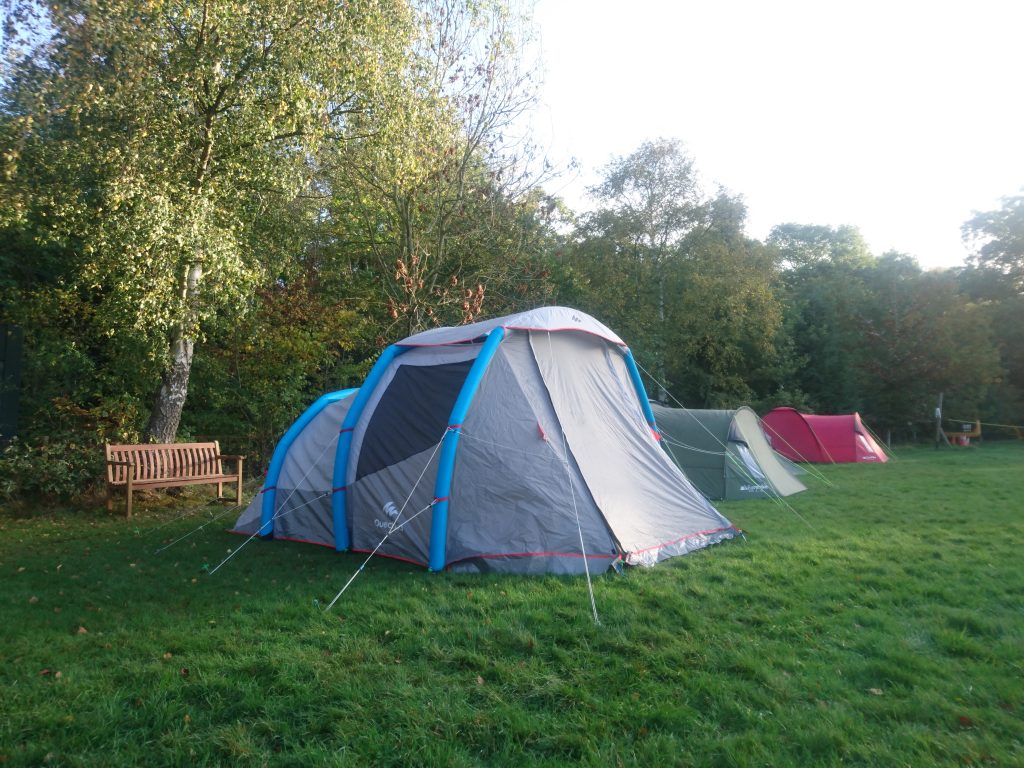
I’ll admit, I’m biased. My personal tent is a Decathlon 4.1 XL air beam tent, and I absolutely love it. The bedroom is spacious, there’s a proper living area, and here’s the kicker—my kids can pump it up in minutes. No struggling with poles, no complicated threading systems, just inflate and you’re done.
After the COVID lockdown, we went camping in Devon in the middle of a heavy storm. The next morning, mine was the only tent still standing while traditional tents around us had collapsed or snapped poles. The secret? Over-inflate slightly in bad weather to add extra rigidity. It’s that simple.
The Practical Concerns
Of course, air beam tents aren’t perfect. They’re heavier and bulkier than traditional tents, and they don’t pack down as small. You absolutely must remember to bring a pump (though that’s hardly rocket science).
The elephant in the room: cost. You can pick up a decent traditional scout tent for around £150, but air beam tents start at £350+ or more. That’s a significant investment.
But what about punctures? Here’s the thing—yes, air beams can be punctured, but so can traditional tents. A scout with a knife or a tent peg can damage any tent if they’re being careless (or deliberately destructive). The actual risk of accidental puncture is incredibly low, much lower than the risk of snapping fiberglass poles through normal use.
The Investment Question
Sometimes paying more upfront for quality equipment makes sense. If air beam tents last as long as our traditional ones did—a solid decade of heavy use—then the higher initial cost becomes more justifiable. They’re faster to set up (crucial when you’ve got 20 scouts standing around in the rain), more storm-resistant, and less prone to the kind of wear-and-tear damage that comes from pole systems.
The Big Question
So here I am, ready to potentially break with tradition and take my Scout Group into the air beam era. But I’d love to hear from other leaders:
- Have you made the switch?
- How have air beam tents performed for your group?
- Any regrets or unexpected benefits?
- Would you recommend taking the gamble?
Scouting has always been about preparing young people for the future while respecting the wisdom of the past. Maybe it’s time our equipment reflected that same philosophy.
What do you think? Are air beam tents the future of scout camping, or is there still value in sticking with traditional designs? Drop your thoughts in the comments—I genuinely want to know before I commit our budget to this decision.
Until next time, happy camping!
Originally recorded for my YouTube channel a few years ago – watch the video here




No comments