

A question that divides Scout Leaders everywhere – and there might not be a right answer
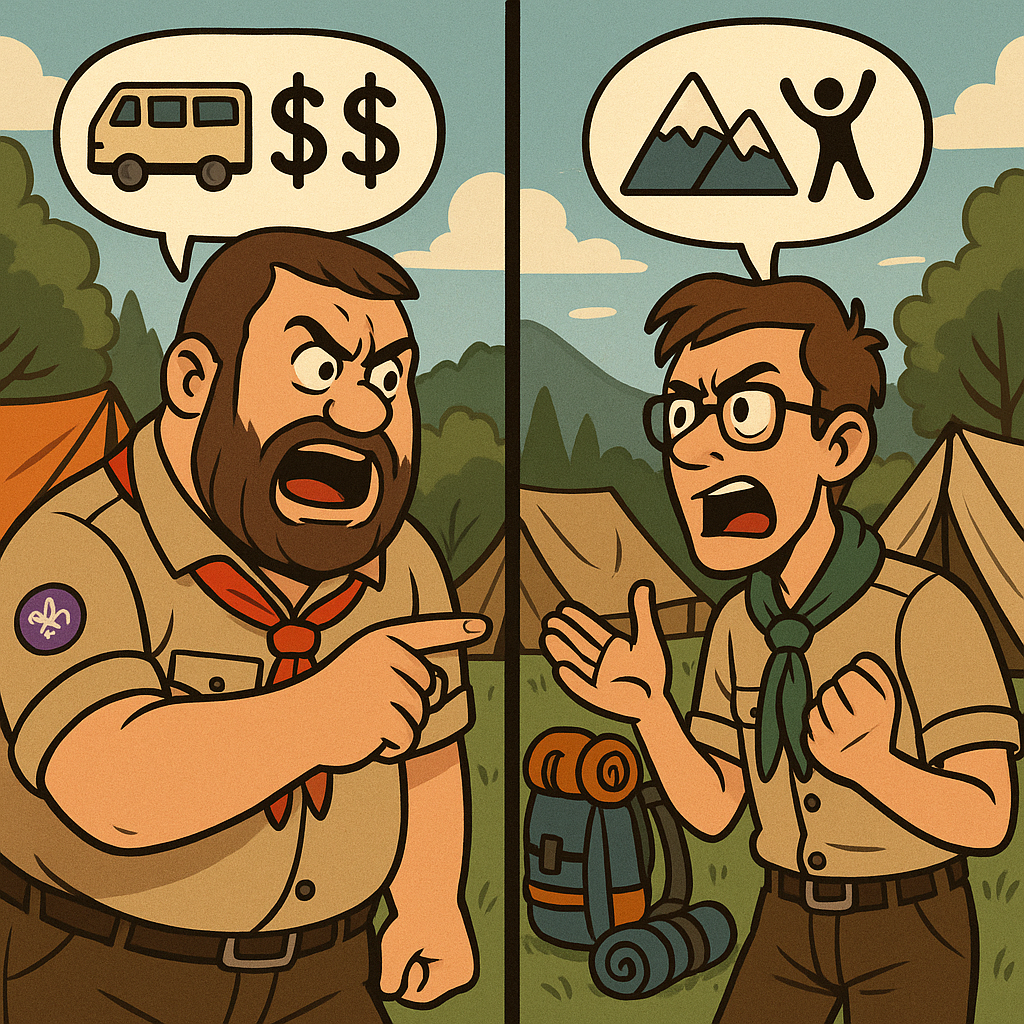
Picture this: You’re at a county camping event, nursing a cup of tea, minding your own business. Suddenly, you find yourself witnessing one of those conversations – the kind that goes round and round with no clear resolution in sight. If you’ve been a Scout Leader for more than five minutes, you know exactly what I’m talking about.
This particular debate centered on one of the most contentious topics in scouting: Should we travel far for camp, or keep it local?
🎥 Prefer to watch? Check out the video version of this discussion on YouTube where I dive deeper into this heated debate I witnessed firsthand.
The Case for Staying Close to Home

On one side stood a passionate advocate for local camping. His argument was compelling and practical:
The Financial Reality Check
- Mini-bus hire for a three-hour journey (which inevitably becomes five hours in traffic) costs hundreds of pounds
- That same money could upgrade your activities – think caving instead of bouldering, or professional climbing instruction
- Parents can car-share for drop-offs, keeping costs down for families
- Money stays within the county or district, supporting local scout facilities and infrastructure
The Time Factor
- More time actually at camp rather than traveling to it
- No exhausted scouts arriving after hours on the road
- Leaders don’t need to take as much time off work
There’s undeniable logic here. Why burn through your budget on transport when you could be giving your scouts better experiences once they arrive?
The Case for the Great Adventure

But the opposing Scout Leader had equally passionate arguments for far-flung adventures:
The Journey IS the Adventure
- Those mini-bus moments – Scouts creating songs, sharing stories, building friendships
- The camaraderie that develops when you’re “stuck” together (there’s something special about being in it together)
- Teaching resilience and problem-solving when things don’t go to plan
New Horizons, New Experiences
- Getting Urban Scouts out of the smog and into mountains or countryside
- Exploring different regions – Wales, Scotland, places they’d never otherwise see
- Breaking the monotony – if you use the same local campsite repeatedly, do the Scouts just expect the same experience every time?
Life Skills in Action
- Dealing with traffic jams teaches patience and adaptability
- Navigation challenges on unfamiliar roads
- Experiencing different cultures and environments
The Reality Check: Why Many Leaders Choose Local

Here’s where honesty kicks in. As much as we might romanticize those epic journeys to distant campsites, the reality for many volunteer leaders is more complex:
The Time Crunch Many Scout Leaders work full-time jobs and have families. Taking a week off for summer camp means using precious annual leave – leave that might otherwise go toward family holidays. When your leadership team consists of just three people (as many groups do), coordinating everyone’s availability becomes a logistical nightmare.
The Leadership Shortage Without leaders, there are no scouts. It’s that simple. If choosing local camps means you can actually run camps consistently with your available volunteers, isn’t that better than planning ambitious trips that never happen?
So, Which Side Are You On?

This isn’t a debate with a clear winner, and that’s what makes it so fascinating. Both sides have merit, and the “right” answer probably depends on your specific circumstances:
- Your budget and fundraising capabilities
- Your leadership team’s availability and work commitments
- Your scouts’ needs and previous experiences
- The quality of local vs. distant facilities
- Your group’s transport options
Finding Your Middle Ground

Perhaps the real answer isn’t choosing sides but finding creative solutions:
- Mix it up: Alternate between local camps and occasional far-flung adventures
- Partner with other groups: Share transport costs and leadership responsibilities
- Day trips: Take scouts to distant locations for day activities rather than full camps
- Progressive adventures: Start local and gradually work up to longer journeys as your team grows
The Bottom Line

The beauty of scouting lies in its diversity – different groups serving their communities in different ways. Whether you’re the leader advocating for local efficiency or dreaming of Scottish highlands, you’re both trying to give young people the best possible experience within your constraints.
The conversation might go round and round, but that’s because both perspectives have real value. Maybe that’s the point – the debate itself shows how much we all care about getting it right for our scouts.
What’s your take? Are you team “keep it local and upgrade the activities” or team “the journey is part of the adventure”? The comment section awaits your verdict on this age-old scouting dilemma.
Remember: There are no wrong answers in scouting – only different paths to the same goal of developing young people’s potential.









1 Comment
It’s always a toss-up! We once spent nearly half our camp budget just getting to a remote site. Since then, we’ve leaned local and found the scouts are just as thrilled – it’s all about the activities and teamwork anyway.