

One of the most common questions I get asked is: “How do I charge my phone at camp?” It’s a simple question with some practical solutions, and I’m going to share my bag of tricks for keeping your devices powered up whether you’re heading out for a weekend camp, a week-long adventure, or a day trip.
Now, I know what you’re thinking – aren’t we supposed to be embracing Mother Nature and disconnecting from technology? While that’s absolutely the spirit of Scouting, the reality is that phones have become essential tools for Scout Leaders in 2025. We need them for emergencies, communication with parents, and yes, even the occasional Social Media update to show everyone what an amazing time we’re having!
Whether your group allows young people to bring phones or not (personally, I don’t, but we’re all adapting as times change), as leaders we rely on our devices for safety and communication. The problem is, batteries drain quickly when you’re out in the wilderness with patchy signal and no mains power. Here’s how I solve that challenge.
My Phone Charging Arsenal
I’ve tested various solutions over the years, and I’ve settled on a reliable system that works for everything from day trips to week-long camps. Let me walk you through what’s in my kit.
The Solar Panel Solution
First up is solar charging. I’ve got a couple of different solar options that I rotate depending on the conditions and the length of camp.
Window Solar Charger I have a basic solar charger with four fold-out panels and suction cups. You can stick it to your caravan window, tent window, or any sunny surface. It’s not a power bank – it’s a direct charger, so you plug your cable into the adapter, connect it to your phone, and leave it in the sun.

The charging speed depends on conditions. On a bright sunny day, you’ll get decent power, but even on a cloudy London afternoon (like when I was testing this recently), there’s enough ambient light to provide a slow trickle charge. It might take a couple of hours, but it works. I don’t use this one regularly anymore, but it’s handy to have as backup.
Mobile Solar Panels – The Game Changer My current go-to solar solution comes from Mobile Solar Chargers UK, and these panels are absolutely brilliant. These aren’t the rigid type – they’re flexible panels that you can hang outside your tent or anywhere with decent light exposure.

What I love about these is the long cable that comes with them. You can hang the panels on the sunny side of your tent and run the cable inside to wherever you’re sitting. The real beauty is that they work even on cloudy days – you don’t need blazing sunshine, though obviously that’s ideal.
My typical setup is to connect these panels directly to my power bank during the day. While we’re out doing activities, the panels are slowly topping up the power bank. Then in the evening, when we’re sitting around the campfire, I’ve got a fully charged power bank ready to go.
The Reliable Backup: Power Banks
While solar is fantastic when conditions are right, you need a reliable backup for those rainy days or when you’re camping in heavily wooded areas with limited sunlight.
My Daily Driver: Anker Power Bank The power bank I swear by is an Anker 335 Power Bank (PowerCore 20K) . This isn’t just my camping essential – it lives in my work bag and comes with me everywhere.
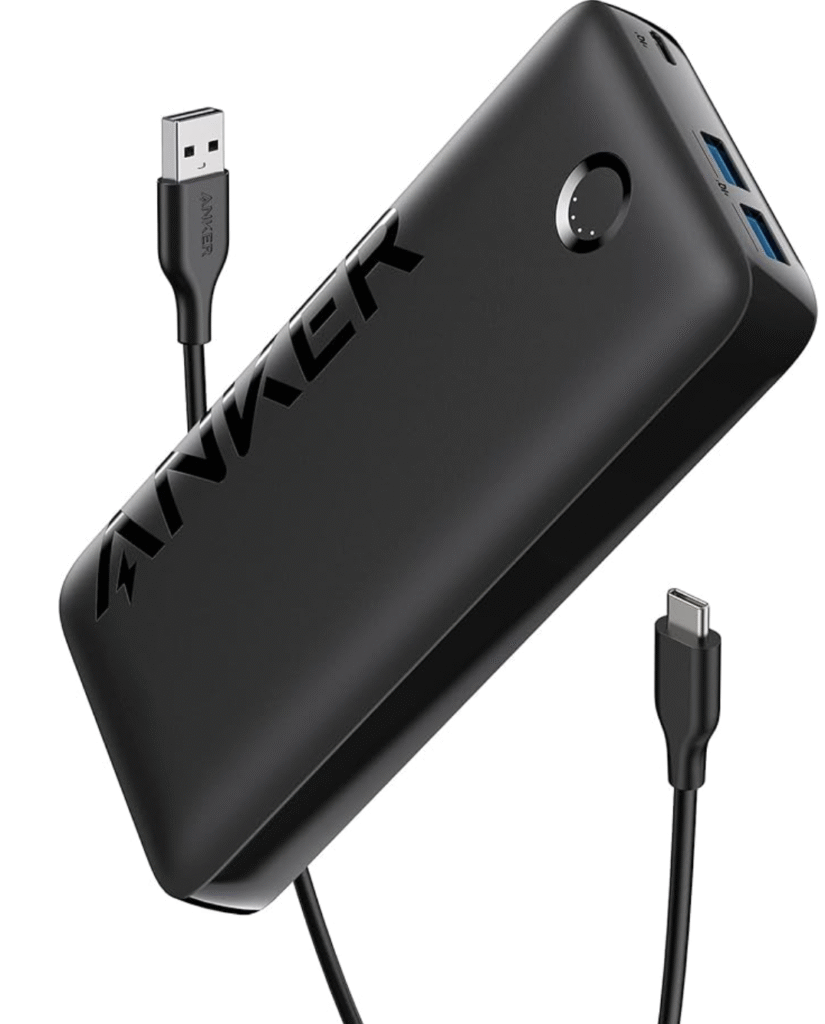
This particular model will charge a completely drained phone approximately 10 times when it’s fully charged. That’s easily enough for a week-long camp, even with heavy usage. For weekend camps, it’s complete overkill, but better to have too much power than not enough.
The Anker brand has never let me down. The build quality is excellent, they hold their charge well when stored, and they’re reliable in all weather conditions. While I can’t endorse specific products (this is just what works for me), I can say that investing in a quality power bank makes a huge difference.
My Charging Strategy
Here’s how I typically set up my charging system at camp:
For Day Trips: Just the Anker power bank. It’s lightweight, reliable, and has more than enough capacity for a day out.
For Weekend Camps: Power bank plus one of the solar options if weather looks good. The solar acts as a top-up during the day.
For Week-Long Camps: Full kit – power bank, solar panels, and backup solar charger. I set up the flexible panels during the day to keep the power bank topped up, ensuring I never run out of juice.
Practical Tips for Camp Charging
Weather Planning: Check the forecast before you go. If it’s going to be solid rain for the whole weekend, don’t bother with solar – just bring extra power banks.
Cable Management: Bring spare charging cables. They’re the first thing to break or go missing at camp.
Charging Schedule: I typically charge devices during quiet times – while cooking dinner, during evening activities, or overnight in the tent.
Share the Knowledge: Teach your fellow leaders about these solutions. There’s nothing worse than having the only working phone when someone needs to contact home.
The Bottom Line
Technology and outdoor adventure don’t have to be mutually exclusive. With the right charging setup, you can enjoy the best of both worlds – stay connected when you need to be, but still embrace that wonderful camp atmosphere.
The combination of a quality power bank and flexible solar panels has transformed my camping experience. No more rationing phone usage or worrying about emergency communication. It’s one less thing to stress about, leaving you free to focus on what really matters – creating amazing experiences for your young people.
Remember, the goal isn’t to spend the whole camp glued to your screen, but having reliable power when you need it is just smart preparation. After all, the best Scout leaders are always prepared!
Have you found other great solutions for keeping devices charged at camp? Share your tips in the comments below – I’m always looking for new gear to test!









No comments