
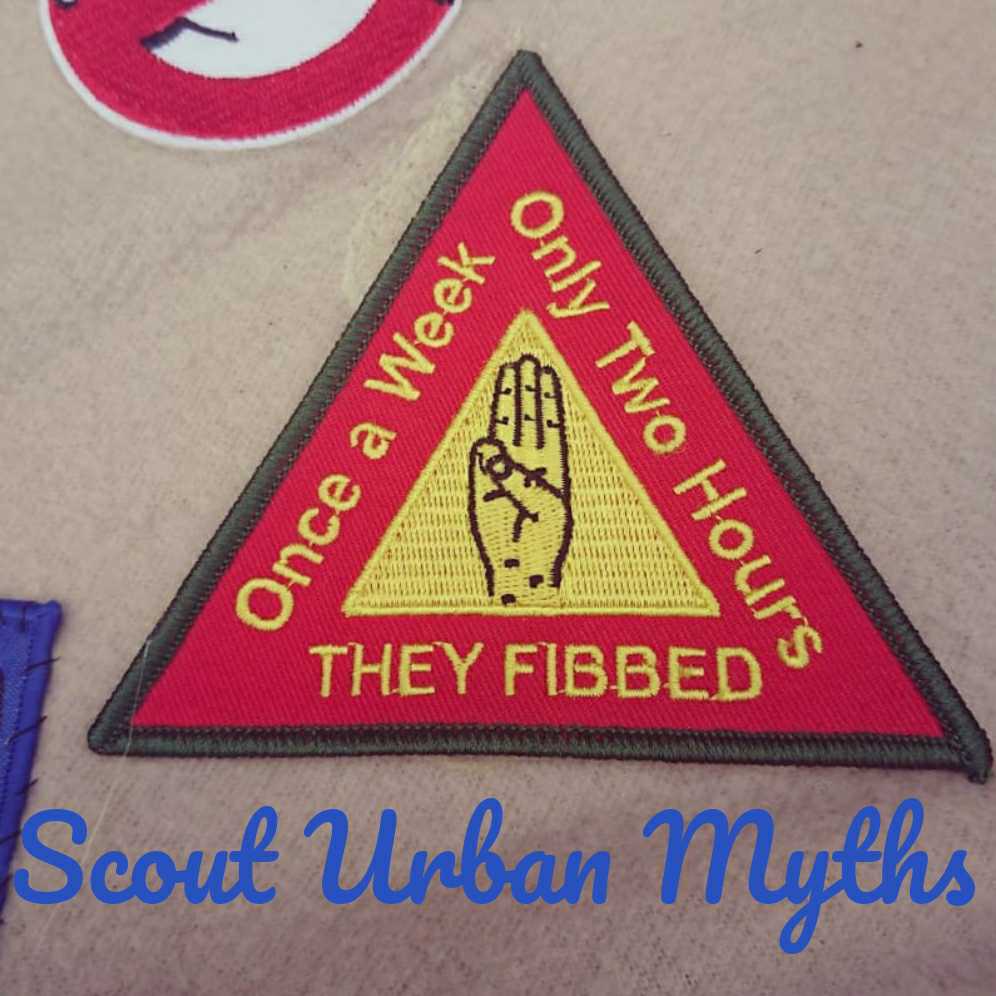
As Scout Leaders, we’ve all heard them – those persistent myths and misconceptions about Scouting that seem to circulate endlessly. Whether it’s from parents considering volunteering, potential new Leaders, or even within our own ranks, these misunderstandings can create unnecessary barriers to participation. Let’s set the record straight on some of the most common Scout urban myths!
Volunteer Commitment Myths

“You have to help every week”
The Truth: Even as uniformed leaders, you don’t have to make it every week. Scouting understands that volunteers have other commitments and responsibilities.
“Scouting takes over your life”
The Truth: Only if you want it to! You choose how much time to devote. Some Leaders spend many hours weekly, while others contribute just a few hours a year. The flexibility is one of Scouting’s strengths.
“Training takes up all your free time”
The Truth: Not at all! Training is now “NVQ” style with many modules available through DVDs or workbooks – no physical attendance required. Some modules can be signed off by demonstrating skills you already use at work or home. Even for required courses, many run in evenings or over a single day. Plus, courses are a great way to meet fellow Leaders and gather new programme ideas!
Who Can Help Myths

“I can’t help until my children join”
The Truth: Of course you can! Many Leaders have grown-up children or no children at all. Your skills and enthusiasm are what matter.
“I don’t want to wear a uniform, so I can’t help”
The Truth: There are numerous ways to help that don’t require a Scout Leader’s uniform. From committee roles to occasional helpers, everyone has something valuable to offer.
“Everyone else would be much better than me”
The Truth: What makes you so sure? Every Leader brings unique skills and perspectives. Just come along and see what’s involved before deciding.
The Famous “2-Hour” Myth

“It’s only 2 hours a week”
The Truth: No one knows where this started! It’s become a Scout legend in itself. The actual time commitment varies greatly depending on your role and what you can give. It might be less than an hour weekly or more than two hours on weekends – it’s flexible.
Safety and Insurance Myths

“You need to wear a Scout scarf to be insured on activities”
The Truth: Wearing Scout uniform is not an insurance requirement. Members are insured during all proper Scouting activities, regardless of attire. (You wouldn’t go swimming in full uniform, but you’re still insured!)
“British Bulldog was banned because of Health & Safety”
The Truth: There was never a national or legal ban. Many Scout groups and schools chose not to run this game due to safety concerns about its sometimes rough nature, but this was a local decision, not a mandate.
“Scouts aren’t allowed to throw axes”
The Truth: Axe throwing isn’t banned in Scouts. The upcoming POR will actually change terminology from “axe throwing” to “tomahawk throwing.”
“A Scout group was stopped from camping in a field because of sheep and cow droppings”
The Truth: This amusing tale hasn’t been confirmed – just another random Scout urban myth!
Activity and Inclusion Myths

“Beavers can’t sleep in tents”
The Truth: There are no specific restrictions on Beaver Scouts participating in residential activities, other than normal section ratios. As with any nights away, the suitability of the opportunity for the young people should be considered.
“Scouting is a Christian movement”
The Truth: The Scout Association in the UK is an inclusive, values-based Movement. We are made up of members of different faiths, including those with no faith, and identify with no one faith exclusively. Membership is open to all who share our fundamental values, with different versions of the Promise available to suit different faiths or those with no affirmed faith.
“Scout Leaders get paid and it’s a full-time job”
The Truth: As a voluntary organisation, The Scout Association is unable to pay volunteers for their time. While the impact of Scouting is professional, the leadership is proudly volunteer-based!
Have You Heard Others?
Have you encountered other Scout urban myths circulating in your District or Group? Share them in the comments below – I’d love to read them and perhaps include them in a future myth-busting post!
Remember: Knowing the facts helps us all better explain the real value and flexibility of Scouting to potential volunteers and parents.







12 Comments
[…] post Scouting Urban Myths appeared first on Big Man In The […]
People who do scouting for a long time but do not make it in District air County Scouting are rarely recognised for their service. Although I have been in scouting for fifty five years, but am only an assistant cub leader, the reluctance of people to recognise my service amazes me.
I can quite agree although I have only done about 25 years. I think it’s down to who you are and cliques, I often find those who get into district/area/county roles have the biggest voices. (or those that aren’t really interested in young people it’s about kingdom building for them.) Then you have the cliques, there are numerous in my area, you’ve got the ‘old gang’ who claim to do everything and know everything. Then you’ll usually have younger clique who like to rebel against the older cliques. Neither works. I like to keep my head down and just get on, after all scouting is about the young people at the end of the day. PS I’m still waiting for my 20 year certificate.
Well said. I quite like that. I get bored of the old 2 hours a week thing, it gets a bit tedious.
Totally agree – I do more time as do all the paperwork and organising but have leaders who help run the night and have a lower time commitment. You just work round what works for you and your own section.
Matti Duffy I need this badge for my blanket.
Here’s the link.
https://rover.ebay.com/rover/0/0/0?mpre=https%3A%2F%2Fwww.ebay.co.uk%2Fulk%2Fitm%2F132541927862
An international consistent ???????
Also we all know this is so true. However I personally feel we need more volunteers doing less work. So someone who perhaps only does the accounts or someone who prints out the letters or operates the online joining system (guiding). This leaves time for leaders to do the stuff with kids.
Definitely! I’ve pretty much been a one man show and there’s not enough time to do it all with other commitments.
Making it obvious to parents it a volunteering role may help expectations a bit, and make them realise we need help!
I make sure every new young person/parent that joins our group is fully aware that we are all volunteers and don’t get paid a penny!
2 hours…. I got told 1 hour!
Whaaaaaat!! Lucky lucky