


Nestled in the heart of Poole Harbour, Dorset, lies a small island with an outsized influence on Scouting history. Brownsea Island might appear to be just another nature reserve, but beneath its peaceful woodland walks and red squirrel sanctuary lies the birthplace of the worldwide Scouting movement, a legacy that many visitors never fully discover.
A Tale of Two Identities
The curious thing about Brownsea Island is how it seems to hide its most famous achievement in plain sight. Walk through the National Trust managed pathways today, and you’ll be greeted with abundant signage about rare birds, native heathland, and the island’s famous red squirrel population. What you won’t find are prominent markers celebrating the fact that this is where, in August 1907, Robert Baden-Powell gathered 20 boys for an experimental camp that would change the world forever.

The only significant nod to this monumental history is the Scout Stone, a commemorative marker by sculptor Don Potter unveiled in 1967. Yet for many Scout Leaders making their pilgrimage to this hallowed ground. It’s a curious situation: the birthplace of a movement that now counts over 57 million members worldwide gets less promotional attention than the island’s wildlife.
The Experimental Week That Changed Everything
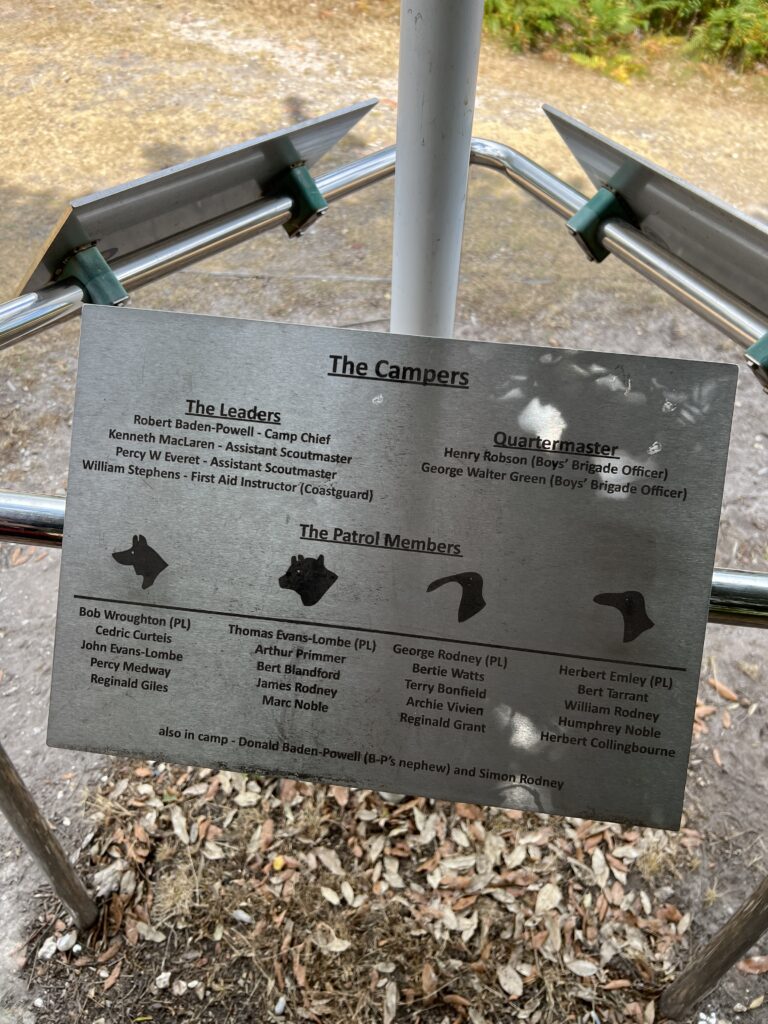
From August 1st to 8th, 1907, Baden-Powell conducted what he called his “experimental camp.” The participants weren’t technically Scouts yet—they had made no promise, worn no uniform, and followed no established programme. Instead, they were testing Baden-Powell’s revolutionary ideas about youth development through outdoor activities, camping skills, and character building.
The Island’s Natural Wonders
Perhaps the National Trust’s emphasis on wildlife isn’t entirely misguided. Brownsea Island is genuinely remarkable from an ecological perspective. The island is one of the few places in southern England where indigenous red squirrels survive, largely because non-native grey squirrels have never been introduced to the island. We estimate that 250 of these iconic creatures live on the island and are often seen scampering up and down the trees gathering and devouring nuts.

The island’s diverse habitats include heathland, woodland, and lagoons that serve as internationally important sites for overwintering and summer-nesting birds. It’s designated as a Site of Special Scientific Interest, and visitors might spot peacocks and hens wandering near the 19th-century church alongside the more famous red squirrels.
The Ferry Journey: A Portal to History
Access is by public ferry or private boat; in 2017 the island received 133,340 visitors. The short ferry ride from Poole Quay to Brownsea Island offers its own charm and history. As you cross the waters of Poole Harbour—one of the largest natural harbours in the world—you’re following the same route that Baden-Powell and his original campers took over a century ago.
The ferry crossing provides a perfect transition from the modern world to this time capsule of British history and natural beauty. There is an annual swim around the island. It is about 4.5 miles (7.2 km) long. The RLSS Poole Lifeguards organize this event. For the truly adventurous, this swim offers a unique perspective on the island’s coastline.
Why the Modest Memorial?
The question raised by visiting Scout Leaders—why doesn’t the National Trust promote the Scouting heritage more prominently—touches on an interesting intersection of conservation and commemoration. The National Trust’s primary mission is conservation, and Brownsea Island represents a success story in wildlife preservation. The Scouting connection, while historically significant, represents just one week in 1907 on an island with much longer and more varied history.
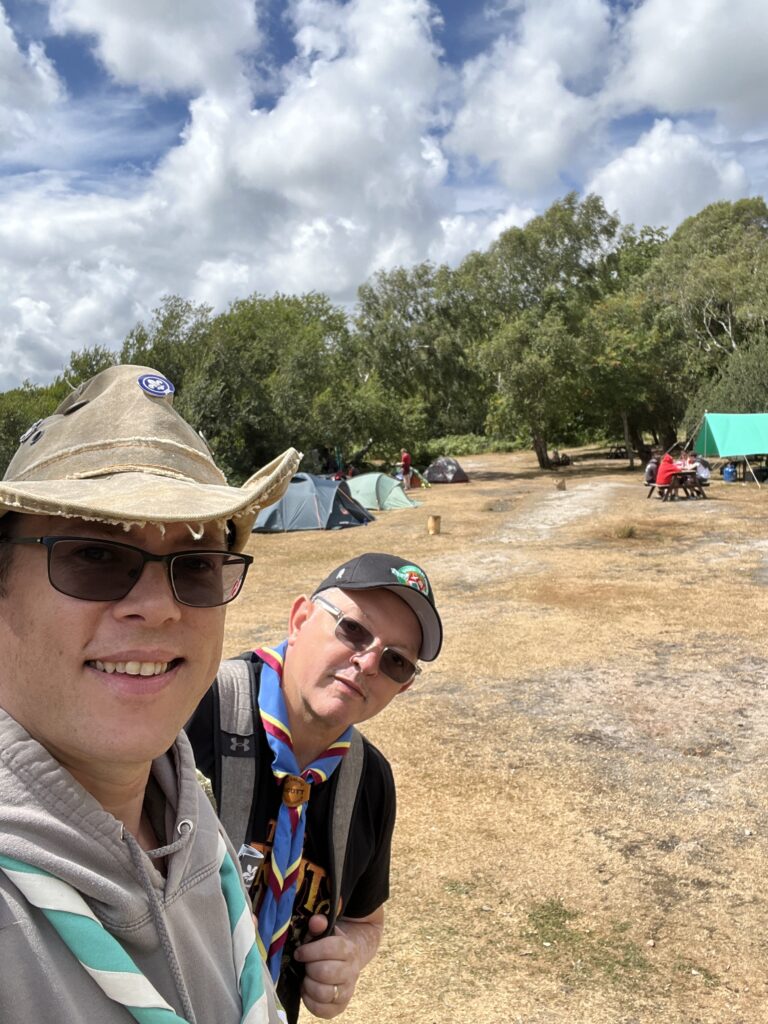
You are able to camp on Brownsea Island since 1964 and infact you can camp on the exact Site that BP camped on all those years ago. Modern Scouts can still experience camping on the island, making their own connection to that pioneering camp of 1907.
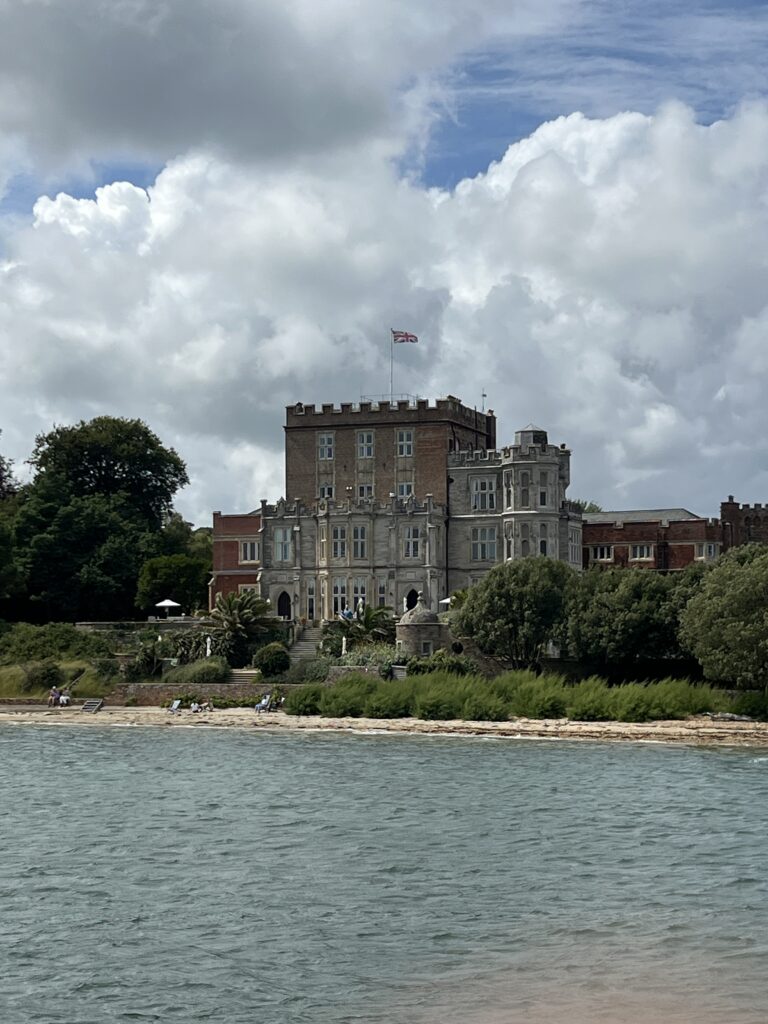
And here’s another fascinating detail that many visitors don’t know: the John Lewis Partnership (which includes Waitrose) owns the castle on the island and uses it as a corporate hotel for their employees and retired staff. John Lewis first gained access to the site in the 1960s, and after extensive restoration work, employees can stay at the castle in what must be one of the most unique staff benefits in British retail. The castle, originally built as a defensive fort by Henry VIII, now offers John Lewis and Waitrose staff the chance to experience island life in truly historic surroundings.
A Living Legacy
Today, Brownsea Island serves as both a nature reserve and a pilgrimage site, though many visitors experience only one aspect of its significance. For Scout Leaders and movement historians they stay to the left of the island, it remains a place of profound importance—the spot where an idea about youth development was tested and proven to work. For nature lovers, they take the path on the right of the island, it’s a rare haven where red squirrels thrive and diverse ecosystems flourish.
Perhaps the island’s understated approach to its Scouting heritage is fitting. Baden-Powell’s experiment was, after all, about letting young people discover things for themselves rather than having everything pointed out to them. In that spirit, Brownsea Island continues to reveal its secrets to those curious enough—and persistent enough—to seek them out.

The next time you catch the ferry to Brownsea Island, remember that you’re not just visiting a nature reserve. You’re stepping onto the ground where one of the world’s largest youth movements began, where an idea about outdoor education and character development first took root, and where the foundations were laid for programs that continue to shape young lives more than a century later.









1 Comment
We are visiting Brownsea on the 18th of Aug! I love the display of neckers they have there. We will be bringing along our new squirrel drey necker to add to the collection! It’s amazing to see the groups which have visited from all across the globe!